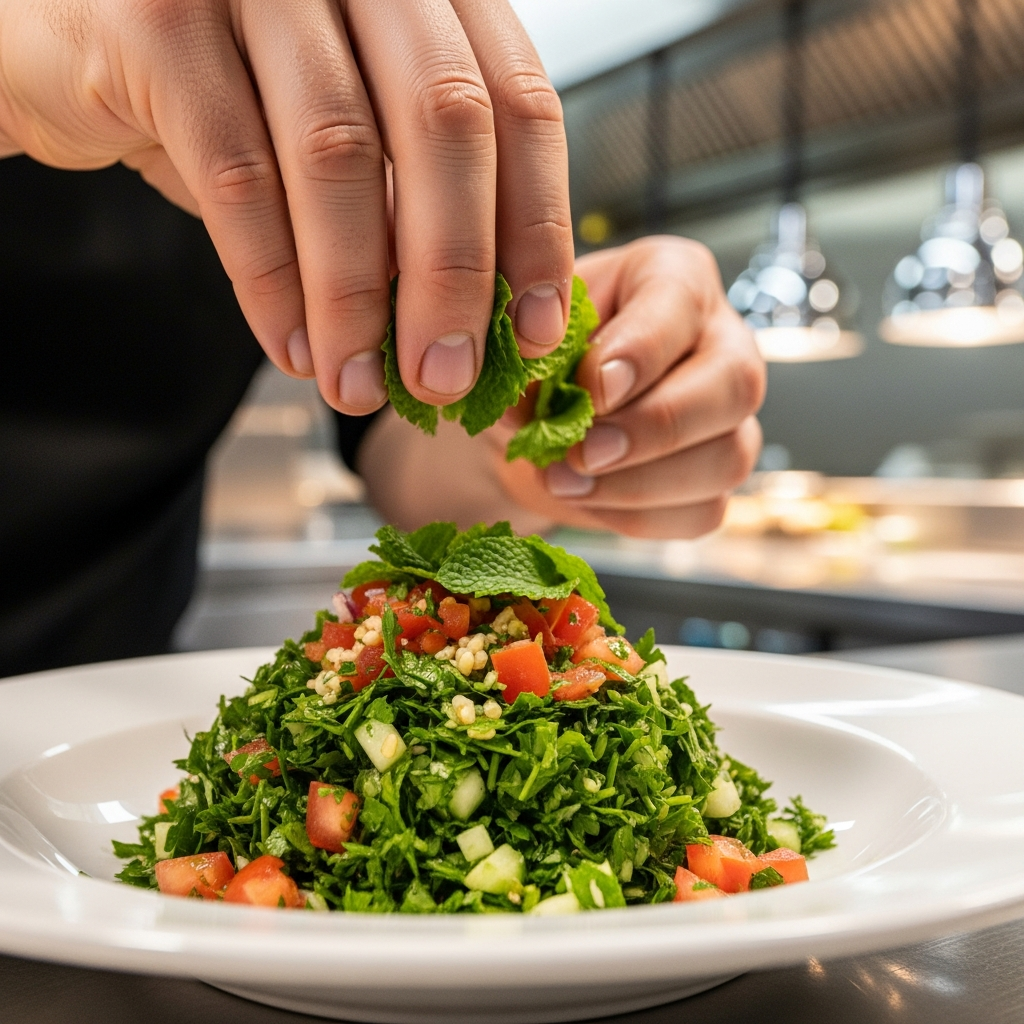
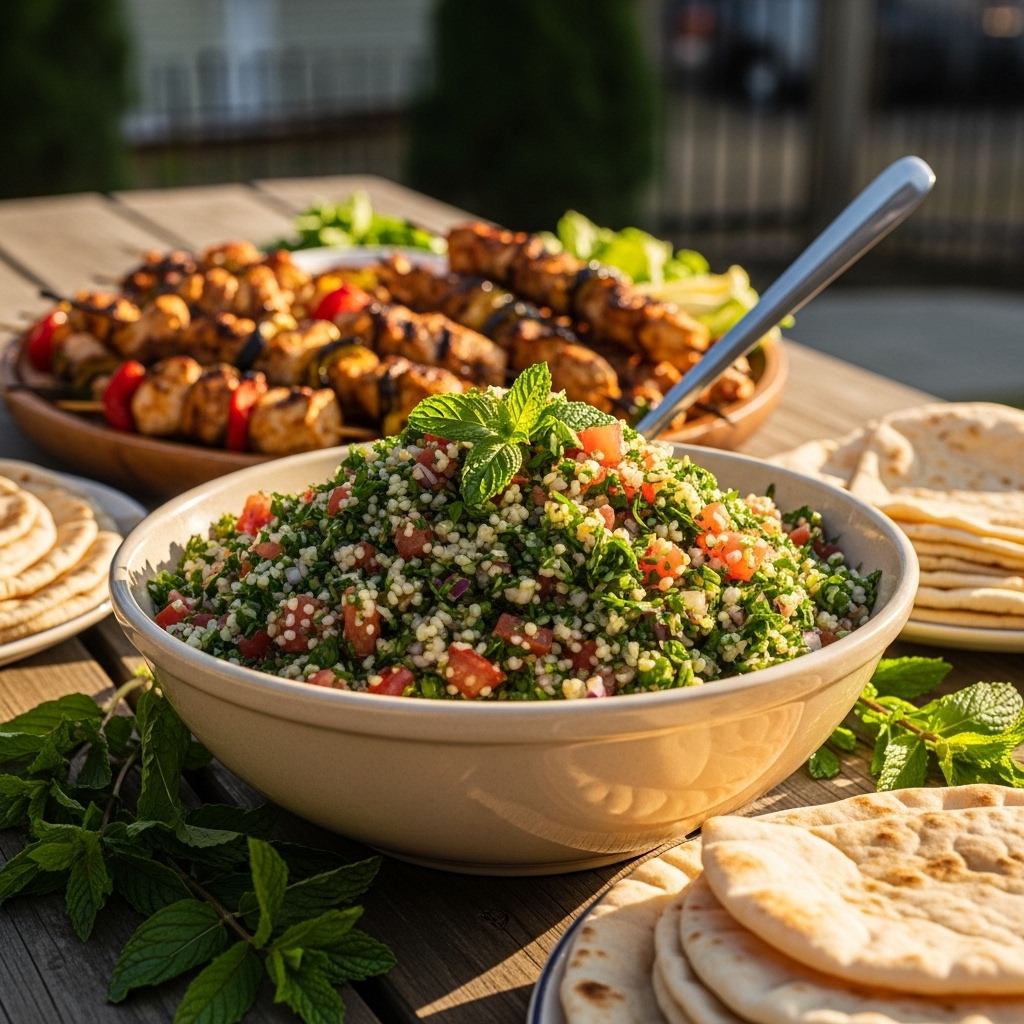
In Naperville, Lebanese Taboili salad traditions have woven themselves into the everyday life of our suburb, quietly shaping how we gather and eat. On weekends, you’ll catch the cadence of knives on cutting boards, the fresh scent of lemon rising from a mixing bowl, and conversations that meander from family news to stories of grandparents who taught an exacting chop and a gentle hand with olive oil. Taboili—parsley-bright, lemon-forward, and humble in its ingredient list—has become a way of welcoming people to the table, whether they grew up with it or discovered it at a neighbor’s house. And when the meal expands to include warm breads and savory skewers, a glance at a local Mediterranean menu helps shape a spread that honors tradition while fitting our Naperville rhythm.
Lebanese tradition puts parsley at the heart of Taboili, supported by mint, scallions, tomatoes, fine bulgur, lemon, and olive oil. In families across Naperville, that tradition has been preserved with remarkable fidelity, even as modern schedules and suburban kitchens have changed the setting. The essence remains: an herb-driven salad that tastes fresh first and complicated never, assembled with care and served generously.
How Traditions Travel
For many Lebanese families in town, Taboili is a living memory. It’s the dish a grandmother made for Sunday lunch, the green bowl that showed up at holidays, the taste that anchored summer barbecues. When those families put down roots in Naperville, they brought more than recipes; they brought habits of hospitality. They brought a way of cooking that valued clarity and balance, where the knife was an instrument and the salad a shared responsibility across generations.
Over time, these traditions mingled with the rhythms of our suburb. Weeknight dinners became quicker, potlucks more common, and outdoor meals on the Riverwalk a cherished habit. Taboili adapted elegantly because it already embodied flexibility and freshness, qualities that fit Naperville life so well.
The Ritual of the Chop
Across kitchens here, you’ll find a similar choreography. Parsley and mint are washed, spun dry, and laid out on clean towels to shed any lingering moisture. The knife is sharpened. Leaves are stacked and sliced with a calm, rocking motion, then turned and sliced again. The goal is a feather-light chop that keeps herbs intact. This ritual is part technique lesson, part meditation, and part family lore—someone always has a story about who taught them to chase evenness rather than speed.
Scallions receive the same attention, sliced thin enough to spark but not shout. Tomatoes are diced small and sometimes lightly salted to draw away excess liquid. Bulgur, fine and quick to soften, is soaked just to tenderness, then fluffed to remain discreet in the bowl. Lemon and olive oil are whisked into a glossy dressing that shines without weighing down the greens.
Serving the Salad: Hospitality in a Bowl
In Lebanese tradition, Taboili is more than a side dish; it’s a gesture of welcome. In Naperville, that translates to generous bowls at family gatherings, small plates set out before a meal, and bright scoops tucked into wraps on busy evenings. The salad’s brightness cuts through richness and complements warmth, making it an easy partner for everything from grilled meats to roasted vegetables.
When hosts want to expand the table, they often look to the familiar pairings of warm pita, garlicky sauces, and savory skewers. If you want a quick nudge toward combinations that have stood the test of time, browsing a nearby shawarma menu can spark a spread that feels both traditional and tailored to your crowd. In this sense, Taboili acts like a compass, pointing toward balance and variety without overshadowing any one dish.
Seasonality and the Midwest Touch
Naperville cooks lean into the seasons. In early summer, herb bundles arrive perky and abundant, and cucumbers snap with refreshing crispness. Later in the season, tomatoes grow sweeter and denser, and the salad takes on a sun-warmed richness even as it stays light. In winter, lemon and scallion keep the bowl lively, a promise of the greener months ahead. This seasonal flexibility is entirely compatible with tradition because the core of Taboili isn’t a rigid recipe—it’s a principle of freshness and restraint.
There’s also a local practicality at work. Weeknights get busy, so families prep components in the afternoon and combine them closer to dinner. The ritual remains intact, but the timing bends to the day’s needs. That kind of pragmatic respect—keeping the soul of the dish while adjusting the schedule—is what lets traditions flourish here.
Storytelling at the Table
Ask around and you’ll gather stories. Someone will recall learning to zest a lemon without scraping the bitter pith. Someone else will remember being told not to drown the herbs in oil. Another will describe being taught to taste twice: once immediately after tossing and again after a short rest, noticing how the flavors align. These stories aren’t just quaint—they’re the mechanisms by which technique survives and evolves from one household to the next.
You’ll also hear about the role Taboili plays at milestones. Graduations, birthdays, and holidays all see that green bowl appear as a quiet sign of continuity. In a town as dynamic as Naperville, where neighbors arrive from all over, serving Taboili becomes a way to anchor gatherings in something that feels both specific and welcoming.
Respecting the Core While Making Space
Tradition has guardrails: parsley leads, bulgur stays modest, lemon speaks clearly, and the chop is meticulous. Within those guardrails, there’s room for thoughtful variation. Some families like a little more mint for perfume, others keep cucumber strictly seasonal, and some dial the lemon up or down depending on what else is on the table. These variations don’t dilute tradition; they prove its strength by showing how it can flex without losing its identity.
What tradition resists is clutter. When extra ingredients pile on, the salad’s voice gets crowded. The Naperville consensus, shaped by Lebanese roots, is that the best Taboili is eloquent in few words: freshness, balance, and clarity.
The Social Life of a Salad
Taboili thrives in company. It’s as comfortable next to a picnic basket as it is alongside a more formal dinner. Because it’s vibrant and plant-forward, it bridges dietary preferences, welcoming everyone to the same bowl. This makes it a beloved potluck contribution in Naperville’s blend of neighborhoods and friend groups, from cul-de-sac gatherings to post-game spreads.
It also plays well with leftovers. A spoonful refreshes last night’s rice, livens up roasted vegetables, or slides into a warm pita for a quick lunch. In this way, the salad continues the tradition of resourcefulness—nothing wasted, flavor maximized.
Frequently Asked Questions
Q: What makes Taboili “Lebanese” in character?
A: Lebanese character shows in the parsley-first ratio, the fine chop, and the bright lemon profile softened by fruity olive oil. Bulgur is present but subtle, and add-ins are restrained so the salad reads as clean and herb-centric rather than busy.
Q: Do families in Naperville follow the same recipe?
A: The core is consistent—parsley, mint, scallions, tomatoes, fine bulgur, lemon, and olive oil—but each family fine-tunes amounts and technique. That spectrum of small differences is part of the tradition, not a departure from it.
Q: Is cucumber traditional?
A: Cucumber appears in many local bowls, typically diced small and used seasonally. Its inclusion is optional; the salad doesn’t depend on it. When it tastes great, it adds refreshment; when it doesn’t, the salad is complete without it.
Q: How do you keep the herbs from bruising?
A: Dry them thoroughly and use a sharp knife with a gentle rocking motion. Avoid processors, which compress and wet the leaves. Patience and evenness are the watchwords; the chop should look like a green snowfall, not a smear.
Q: Can Taboili be made ahead for a gathering?
A: Yes. Prep components in advance and combine closer to serving. If you dress early, allow a brief rest for flavors to settle, then toss again just before plating to restore the salad’s feathery texture and sheen.
Q: What should I serve alongside it?
A: Warm breads, savory skewers, roasted vegetables, and garlicky dips create a spread that complements the salad’s brightness. For ideas that echo traditional pairings, glance at a local shawarma menu and build a table that feels generous and grounded.
Carry the Tradition Forward
Keeping Lebanese Taboili traditions alive in Naperville is as simple as a sharp knife, fresh herbs, and the willingness to share. Make the salad on a quiet weeknight, bring it to a friend’s house, or set it alongside something warm and aromatic. When you’re planning the rest of the meal, look to a nearby Mediterranean menu for pairing cues, then gather the people you love. The bowl will do the rest, carrying stories and flavors from one table to the next.