
In a city that loves its picnics, park concerts, and lunch breaks by the Riverwalk, Taboili salad has earned a special place at the Naperville table. It is light, bright, and easy to share, which makes it a favorite for family dinners and outdoor gatherings alike. But because Taboili depends on delicate herbs, juicy tomatoes, and crisp cucumbers, keeping it fresh requires a bit of know-how. With a few smart habits, you can enjoy a salad that tastes as lively at the park as it does at the counter. If you are browsing a neighborhood spot’s Mediterranean menu or assembling a batch at home, these storage and freshness tips will help your Taboili stay in top form from the first bite to the last.
Think of Taboili as a salad that rewards thoughtful preparation. Because its ingredients are simple, there is nowhere to hide sloppy technique. The good news is that tiny improvements—drying herbs thoroughly, seeding tomatoes, chilling at the right time—pay big dividends in flavor and texture. For families packing meals for school, for professionals commuting from downtown, and for anyone planning an afternoon at Centennial Beach, a little planning can make all the difference.
Start with the driest possible herbs
Water is the enemy of crisp Taboili. After washing parsley and mint in cold water, spin them thoroughly and spread the leaves on clean towels to air-dry for at least ten minutes. This step is non-negotiable. When herbs are even slightly damp, dressing slides off and the salad can turn soggy as it sits. In Naperville’s humid summers, it is especially important to remove surface moisture so the greens stay perky during transport and outdoor meals.
Sharp knives help, too. A clean cut releases fragrance without bruising leaves into a paste. If you have ever wondered why some Taboili tastes bitter a few hours after it is made, overworked herbs are often the culprit. Gentle chopping preserves both flavor and structure.
Manage moisture in tomatoes and cucumbers
Tomatoes and cucumbers carry a lot of water, which is both a blessing and a challenge. For storage, you want their juiciness without the watery runoff that can pool at the bottom of your container. Seed both before dicing, and cut them small enough to mingle with the herbs. If you have particularly ripe tomatoes from a local market, sprinkle them with a tiny pinch of salt and let them drain for five minutes. This concentrates flavor and reduces the risk of a watery salad.
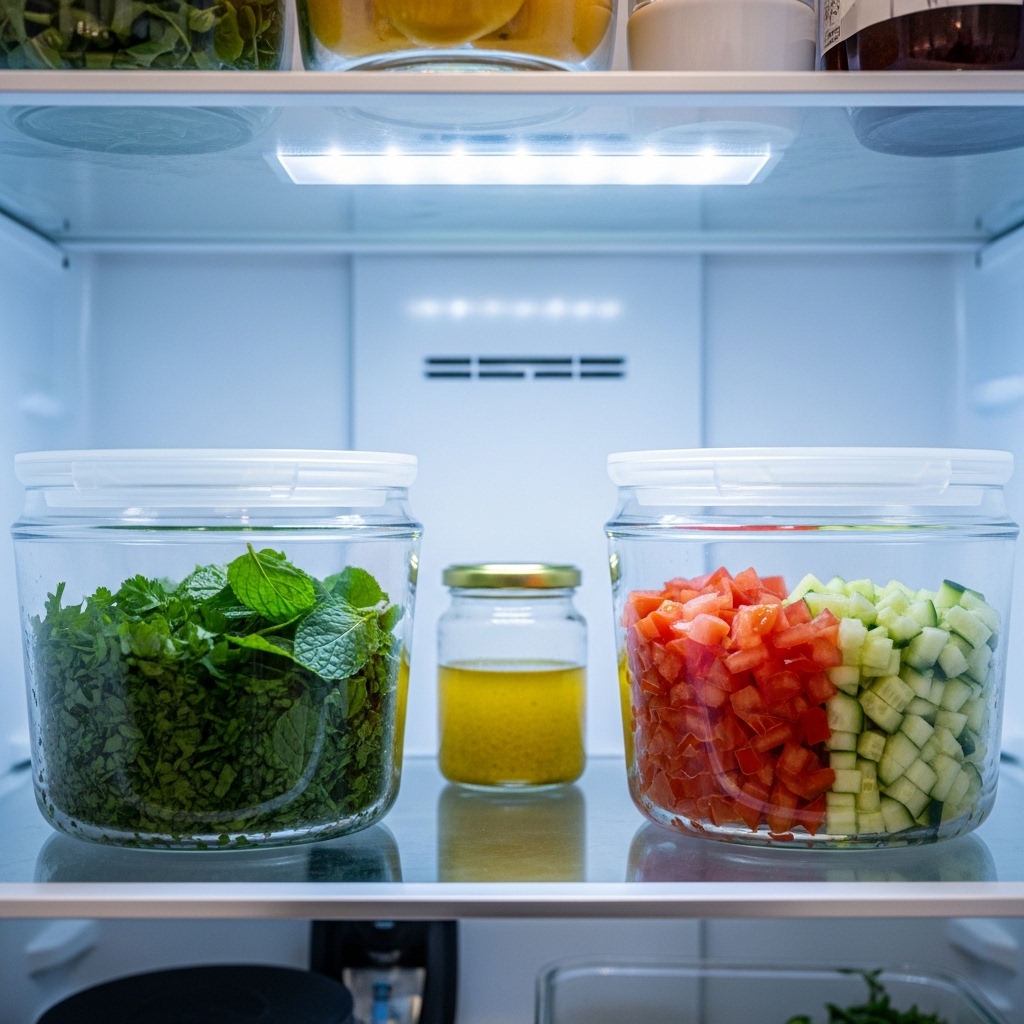
For outdoor events around Naperville, consider packing the vegetables separately from the herbs and combining just before serving. This strategy preserves crunch and keeps the salad tasting freshly made even after a long afternoon in the sun.
Dress at the right moment
The lemon-olive oil dressing gives Taboili its brightness, but timing matters. For immediate service, toss just before eating so the herbs shine. For make-ahead meals, you can lightly dress the herbs to season them, then add a final splash of lemon and oil at mealtime. This two-stage approach keeps the salad lively across a workday or a day of errands along Route 59.
Emulsifying the dressing—whisking lemon and oil until glossy—helps it cling to the chopped ingredients. A cohesive dressing protects herbs from oxidation and slows moisture from seeping out of tomatoes and cucumbers. Think of it like a light, flavorful coat that keeps everything in balance.
Choose the right containers
Container choice can make or break your Taboili’s texture. Opt for shallow, wide containers rather than deep ones. Shallow containers minimize compression, which is crucial for delicate herbs. For takeout, look for vented lids that let excess moisture escape; for home storage, leave a small gap for airflow if the salad is very fresh and you plan to eat it within a few hours.
When carrying Taboili through downtown or to a gathering near Knoch Knolls, place the container on top of other picnic items rather than underneath. Avoid squashing the herbs with heavy items like drink bottles or fruit. The less pressure, the longer the salad stays buoyant.
Temperature control: cold is your friend
Keep Taboili well chilled from preparation to service. Herbs and chopped vegetables hold their structure best at cool temperatures, which also deter bacterial growth. If you are hosting outdoors, set the salad over a bowl of ice or keep it in a cooler bag until the moment you serve. On hot Naperville days, this single step can extend peak texture by an hour or more.
During winter months, a short chill in the refrigerator—about 20 minutes—helps flavors meld without dulling brightness. Avoid long stints in very cold spots where herbs can darken or lose vibrancy. The sweet spot is cool enough to preserve crunch but not so cold that the salad tastes muted.
Smart make-ahead strategies
For busy weeks, prepping Taboili components in stages is a lifesaver. Chop and dry herbs, seed and dice vegetables, and mix dressing in a small jar. Store each component separately and combine as needed. This setup lets you assemble a fresh bowl in minutes—ideal for office lunches near CityGate Centre or quick dinners before evening activities.
If you prefer to assemble the salad in advance, under-dress it slightly and keep an extra squeeze of lemon and a drizzle of olive oil on hand to refresh just before eating. A brief toss restores gloss and brightens flavor, making the salad taste newly made.
Portioning for picnics and events
For gatherings—graduation parties, neighborhood potlucks, or summer concerts by the Riverwalk—portion the salad into individual cups or small containers. This prevents constant opening and closing of a large container, which can introduce warm air and cause condensation. Individual portions also protect the herbs from repeated mixing, helping each serving maintain its best texture.
Labeling containers with the assembly time is a surprisingly helpful tactic. When you know how long the salad has been dressed, you can prioritize older portions first and keep the rest tasting crisp.
Refreshing leftovers the right way
Even well-stored Taboili benefits from a quick refresh. Before serving leftovers, drain any liquid that has collected at the bottom of the container, add a squeeze of lemon, a small splash of olive oil, and fold in a handful of freshly chopped parsley. This returns fragrance and structure without starting from scratch.
Leftovers typically taste great for up to two days if stored properly. Day one emphasizes crunch; day two delivers a more marinated profile. For outdoor lunches or office meals, pack day-two Taboili with a small container of extra herbs to stir in at the last moment for a just-made aroma.
Common mistakes and how to avoid them
The biggest missteps are easy to fix. Do not skip drying the herbs. Do not over-soak bulgur or add too much grain; treat it as a textural accent. Do not chop vegetables so large that they shed moisture onto the herbs. Do not dress far in advance unless you are building in a plan to refresh. And importantly, do not store Taboili beneath heavy items during transport. Awareness of these pitfalls will keep your salad bright and resilient, whether you are dining at home or by the DuPage River.
For takeout, consider requesting dressing on the side if you anticipate a delay before eating. Many Naperville spots are happy to accommodate, and it can be the difference between a crisp salad and a tired one.
Working with the seasons
Naperville’s seasons influence how you store Taboili. In humid summers, herbs absorb ambient moisture quickly; keep containers tightly sealed and well chilled, and seed tomatoes meticulously. In dry winters, protect chopped herbs with a light coating of dressing and store them in the refrigerator’s crisper drawer to prevent wilting. The goal is always to manage moisture and temperature in a way that respects the salad’s delicate structure.
Seasonal produce helps, too. Summer tomatoes are best used the day they are chopped, while winter tomatoes may benefit from a slightly richer olive oil to round out flavor. Cucumbers vary as well—seed-heavy varieties need extra attention, while firm, thin-skinned options hold up beautifully in storage.
Ordering for success
If you are picking up Taboili to take to a friend’s backyard or a park gathering, set yourself up for success with a couple of questions. Ask whether the salad is dressed to order and whether the tomatoes are seeded. Request a container that gives herbs room to breathe. When a restaurant is attentive to these details, you can trust the salad will taste vibrant by the time you reach your destination. If you are browsing a Mediterranean menu and see Taboili highlighted alongside other vegetable-driven dishes, that often signals a kitchen that understands how to keep herbs crisp and flavors balanced.
Transport wisely, too. Keep the salad cool in the car, avoid direct sunlight, and do not stack heavy items on top. A few simple habits can preserve the work that went into making your Taboili exceptional.
Pairing and plating to maintain texture
What you serve with Taboili can influence how well it holds up on the plate. Keep hot items nearby rather than directly on the salad, and give the greens space so steam does not soften them. If you are building bowls, layer Taboili on top of grains or alongside proteins rather than underneath. Good plating protects the herbs while showing off the color and texture that make the salad so appealing.
At home, use wide, shallow bowls that allow a gentle toss without crushing the greens. This helps the dressing coat evenly and keeps every bite balanced.
Frequently asked questions
How long can Taboili stay fresh in the refrigerator?
With careful prep and storage, Taboili keeps its best texture for about 24 hours and tastes delicious for up to 48. Day one is crisp; day two is more marinated. For the longest freshness, store components separately and combine just before serving.
What is the best way to pack Taboili for a picnic?
Use a shallow, wide container, keep it well chilled, and bring the dressing separately if possible. Assemble just before eating, and keep the salad out of direct sun. A cooler bag makes a remarkable difference on hot Naperville days.
How do I prevent watery leftovers?
Seed tomatoes and cucumbers thoroughly, dry herbs well, and drain any collected liquid before storing. Refresh with a squeeze of lemon and a spoonful of freshly chopped parsley right before serving.
Can I freeze Taboili?
Freezing is not recommended. Herbs and cucumbers lose structure when thawed, resulting in a mushy texture. Instead, make smaller batches more often, or store components separately to assemble fresh salads quickly.
Is glass or plastic better for storage?
Both can work, but glass containers with tight lids tend to control odor transfer and maintain temperature well. Choose shallow containers to avoid compressing the herbs, regardless of material.
When you are ready to enjoy Taboili that travels as beautifully as it tastes, look to a trusted local spot, build your meal around the salad, and set the stage for freshness with smart storage habits. Start by browsing a Mediterranean menu, pick a crisp, herb-forward Taboili, and bring home a bowl that fits effortlessly into the flow of life in Naperville.