
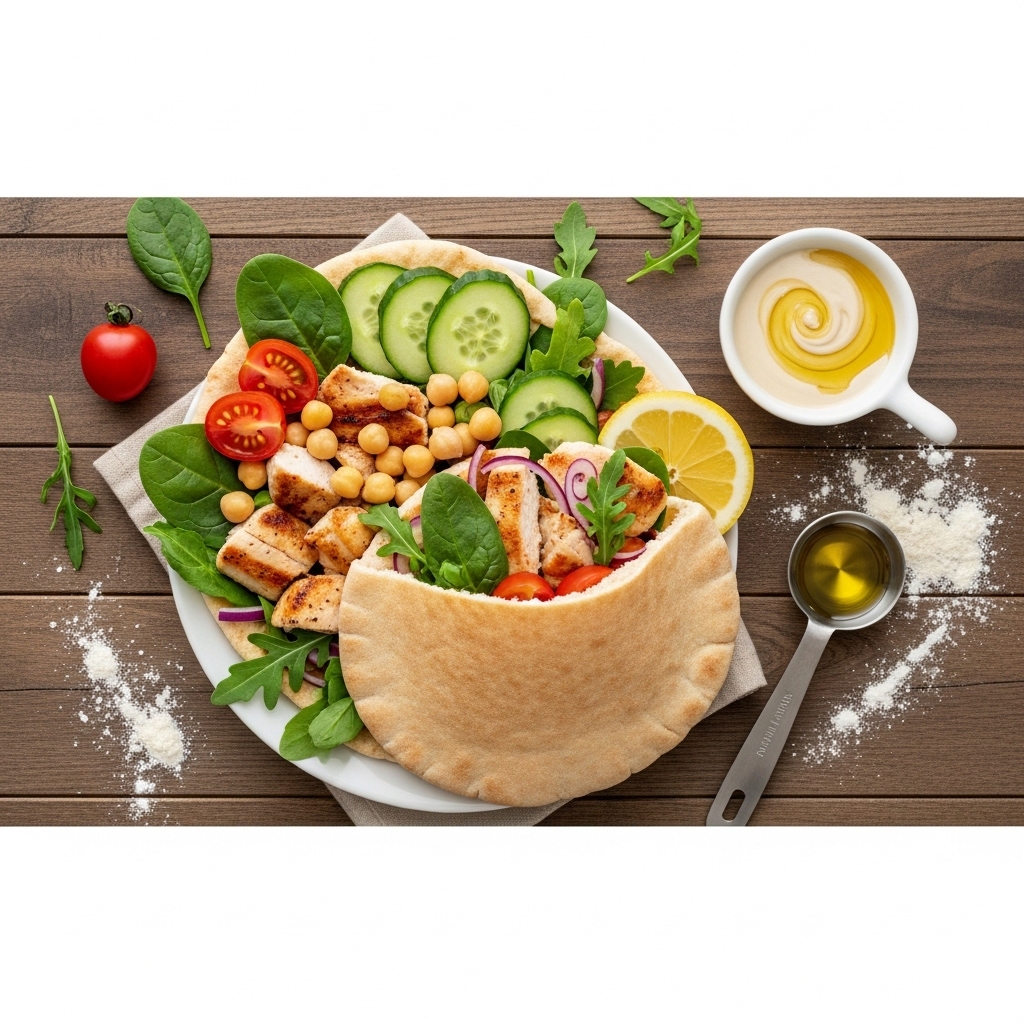
Walk around Downtown Naperville at lunchtime and you will see plenty of pitas in the wild—wrapped around grilled meats, torn into pieces alongside salads, and folded into handheld meals that make the Riverwalk stroll easier. For all the ways we enjoy pita bread here, it helps to understand what is inside those warm rounds from a nutrition perspective. Knowing the fundamentals lets you order and build meals that fit your goals, whether that is balanced energy for an afternoon of meetings on Jefferson Avenue or a lighter dinner before a show at North Central College. A good place to begin is with an understanding of how pita is made and how its ingredients translate into macronutrients. If you have ever glanced at a thoughtfully assembled Mediterranean menu and wondered how to keep things both delicious and smart, this guide will meet you where you eat—right here in Naperville.
At its core, classic white pita is made from flour, water, yeast, and salt. That means its nutrition profile is similar to other wheat breads, with carbohydrates as the primary energy source, a moderate amount of protein from the wheat, and a small amount of fat. One average-sized round generally falls into a familiar calorie range for bread, but the real art is in how you pair and portion. Because pita is a pocket, it encourages structured eating: you can tuck in vegetables, lean proteins, and sauces that turn bread into a balanced meal. That is one reason it has become a lunchtime staple from Ogden to 95th, with diners finding a rhythm that keeps them satisfied without feeling weighed down.
Carbohydrates, Fiber, and Energy
Carbohydrates are the engine here, and the type of flour matters. White pita, made with refined flour, tends to be light and tender with a quick rise in blood sugar that levels out if you pair it with protein and fiber. Whole wheat pita includes the bran and germ, delivering additional fiber and nutrients. In practical terms, that extra fiber can help you feel full longer, which is useful on a busy day of errands between the library and the grocery stores along Route 59. The fiber also contributes to digestive health, and in a well-made whole wheat pita, it comes wrapped in a warm, nutty flavor that feels anything but austere.
If you are looking to balance energy, think about the total meal. A pita stuffed with grilled chicken or falafel, topped with a crunchy salad, and finished with a judicious amount of sauce becomes a steady source of fuel. The bread supplies the carbohydrates, the filling adds protein and fiber, and the sauce brings flavor in a concentrated form so you do not need to overdo it. Eating this way is common sense, but seeing it in action—watching a cook layer textures and tastes—makes the nutrition strategy feel intuitive.
Protein: The Quiet Contributor
While pita itself is not a protein powerhouse, it does contribute a modest amount, especially if you use flours with slightly higher protein content. More importantly, the pocket format invites protein-rich fillings. In Naperville, where lunch moves quickly and dinner often means sharing, you will see plenty of pita wraps that lean on grilled meats, legumes, or plant-based options like roasted chickpeas and spiced cauliflower. This combination works well because protein not only supports muscle repair and satiety but also slows digestion of carbohydrates, leading to a steadier energy curve across the afternoon.
For those who track their intake, portioning is straightforward. Half a pita with a generous serving of vegetables and a moderate portion of protein can feel satisfying without excess. Full pitas loaded with greens and lean fillings are a comfortable fit for active days. The flexibility is one of pita’s best qualities—it adapts to where you are and what you need.
Fat, Sauces, and Smart Choices
On its own, pita is low in fat, but once you add sauces and fillings, the picture changes. That is not a bad thing; fats carry flavor and provide satiety. The key is choosing what kind of fat and how much. Yogurt-based sauces offer creaminess with a lighter touch. Tahini adds body and a nutty taste along with beneficial unsaturated fats. Olive oil, used thoughtfully, brings both flavor and a favorable fat profile. When you are looking through a counter’s options, think about contrast: if your filling is rich, balance it with bright vegetables and a lighter sauce. If the filling is lean, a slightly richer sauce can round out the mouthfeel so every bite is satisfying. Watching how a good kitchen composes a wrap on the fly is like seeing nutrition and flavor negotiate in real time.
Across Naperville, I notice diners tailoring their pitas according to the occasion. A quick lunch before errands might mean extra salad and a small drizzle of sauce. A relaxed dinner with friends becomes an excuse to share sides and savor a fuller range of flavors. Either way, pita’s role is to bring it all together, giving you the structure to build a meal that suits your appetite and goals.
Whole Wheat vs. White: What Fits Your Day
Choosing between whole wheat and white pita depends on what you want from the meal. Whole wheat brings extra fiber, minerals, and a slightly heartier bite. It is a great choice when you plan to fill the pocket with crisp vegetables and lighter proteins because the bread itself adds a grounded, nutty note. White pita is tender and neutral, letting spices and sauces take center stage. If you are introducing kids to the world of wraps or want the softest possible texture, white pita can be the right call. In Naperville, both are easy to find, and many kitchens will offer them side by side. Try each with your favorite fillings to see how the overall balance shifts.
There is also the question of sodium. Bread is a meaningful contributor to daily sodium intake, and pita is no exception. Well-made pitas use salt to sharpen the wheat’s flavor, not dominate it. If you are watching sodium, ask for sauces on the side and build your wrap with fresh vegetables and herbs, which pop without relying on salt. It is a simple tweak that keeps flavor alive while respecting your targets.
Micronutrients and Enrichment
Many white flours are enriched with B vitamins and iron, which can be helpful for those who do not regularly consume other fortified foods. Whole wheat flours, meanwhile, carry the naturally occurring vitamins and minerals from the wheat kernel. While pita is not a multivitamin, it can contribute to a well-rounded diet, especially when paired with produce and legumes. In Naperville’s restaurants, the supporting cast—tomatoes, cucumbers, parsley, onions, pickles—does a lot of the heavy lifting on the micronutrient front. Build your pita like a small salad in bread form, and you cover more bases than you might expect.
Another quiet player is fermentation. Some bakers use preferments or longer rises, which can subtly affect digestibility and flavor. A dough that develops over hours may taste richer and feel gentler on the stomach for some diners. If that matters to you, ask about it. People behind the counter often light up at the chance to talk process, and you will learn which spots put extra time into their dough.
Portions, Timing, and the Naperville Routine
We all eat within the rhythms of our days. On the way to evening events at Rotary Hill, a half pita with a vibrant salad and a lean filling can be perfect—enough to carry you through without feeling heavy. For family dinners, full pitas with a spread of sides turn the meal into a shared experience where everyone finds their balance. The pocket format also makes leftovers behave; you can refrigerate components and build fresh in the morning, an easy solution for busy school days or office commutes.
Balanced eating is not about strict rules; it is about awareness and small decisions made consistently. As you get to know Naperville’s offerings, you will notice how kitchens signal freshness and care. Look for pitas that feel soft but resilient, fillings that are bright and crisp, and sauces that taste lively rather than flat. These sensory cues align with nutrition quality more often than not. When food tastes vibrant, it usually means the ingredients and methods are dialed in.
In the middle of this conversation about nutrition, it is worth pausing to appreciate the craft. Watching a round balloon in the oven, then splitting open to welcome a layer of salad and a slice of grilled meat, is a reminder that eating well is both practical and pleasurable. If you want ideas for combinations that keep you satisfied without tipping into excess, take a look at a local favorite’s thoughtfully composed Habibi Shawarmas menu and notice how textures, temperatures, and flavors are arranged to create balance.
How to Order Smarter in Town
When you are at the counter in Naperville, start by thinking about the base of your pita as a canvas. Ask for extra greens and fresh vegetables; they add volume and crunch for minimal calories while bringing vitamins and minerals. Choose a primary protein that fits your day—grilled chicken, seasoned beef, falafel, or roasted vegetables all have their place. Then consider sauce as a finishing brushstroke. A little goes a long way, especially if that sauce is bold with garlic, lemon, or tahini. If you are sharing, consider ordering a mix of items and tasting across the table. This approach lets you enjoy variety while keeping portions sensible.
Whole wheat pitas pair wonderfully with brighter, herb-forward fillings, while white pitas shine when the sauce is the star. Either way, adding pickles or a squeeze of lemon cuts richness and keeps your palate awake. These small adjustments change how the meal lands and how you feel after. Over time, you will develop a sense of what works for your body and schedule.
FAQ
Is pita bread a good choice for a balanced meal?
Yes. Pita brings carbohydrates for energy and a modest amount of protein, and it is designed to be paired with vegetables, legumes, and lean proteins. Built thoughtfully, a pita-based meal checks many boxes for balance and satisfaction.
What is the difference nutritionally between white and whole wheat pita?
Whole wheat pita contains more fiber and retains more of the wheat’s natural vitamins and minerals. White pita is softer and lighter, often enriched with B vitamins and iron. Both fit into a balanced diet when combined with smart fillings and sauces.
How can I keep sodium in check when ordering pita in Naperville?
Ask for sauces on the side, emphasize fresh vegetables and herbs, and balance richer fillings with crisp, bright components. Choosing whole foods and controlling the amount of sauce helps you enjoy flavor while moderating sodium.
Does pita have any significant fat content?
Traditional pita is low in fat. The fat in your meal generally comes from fillings and sauces. Olive oil, tahini, and yogurt-based sauces contribute healthier fats when used in reasonable amounts.
Can pita fit into a high-protein eating plan?
Absolutely. Use the pita as a vehicle for protein-rich fillings like grilled meats, legumes, or plant-based proteins. The bread’s structure makes it easy to assemble a high-protein wrap while still enjoying the familiar comfort of warm wheat.
If today feels like the right time to put this into practice, scan a local spot’s menu for combinations that balance crunch, freshness, and satisfying protein, then bring those ideas to your next Naperville lunch or dinner and enjoy how good choices can still taste indulgent.