Pita Sandwiches with a Naperville Point of View
On any given afternoon, you can watch the pace of Naperville shift: families stroll the Riverwalk, students gather with books and headphones, and office workers drift from meetings to meal breaks. In all of this, a pita sandwich is the quiet companion—easy to hold, endlessly adaptable, and just polished enough to feel special. The pocket is a promise: crisp greens will stay crisp, sauces will stay put, and each bite will carry a balance of textures. As a local who has packed more pitas than I can count for park picnics and patio dinners, I’m convinced there’s a sandwich here for every mood, season, and table. And if you ever find your imagination stalling, one glance at a curated Mediterranean menu can set your creativity back in motion.
What elevates a pita sandwich from good to unforgettable is intention. We’re not just stuffing bread—we’re assembling an experience. The best versions treat temperature, texture, and contrast as essential ingredients. A few minutes of thought about heat, crunch, creaminess, and acidity creates a sandwich that holds your attention from first bite to last. In Naperville, where we eat across seasons, this approach lets you echo the weather outside: bright and cool in spring, charred and juicy in summer, warmly spiced in fall, and deeply comforting in winter.
Spring Brightness: Crisp, Green, and Lemony
When crocuses peek and the air gains that first hint of softness, I crave a pita that tastes like sunlight. Start with a swipe of garlicky yogurt, then add ribbons of romaine, slices of cucumber, and thin shavings of radish. Layer in lemon-poached chicken or roasted chickpeas tossed with dill. The key is crunch; each bite should crackle. A scatter of fresh herbs—parsley, dill, mint—turns the sandwich aromatic without heaviness. Finish with a squeeze of lemon and a pinch of salt. The pocket keeps everything tidy, so you can eat as you walk the Riverwalk and breathe in the new season.
On cooler spring days, roasted asparagus or peas lightly smashed with olive oil and lemon slip easily into the pocket, bringing gentle sweetness and vivid color. The yogurt base ties it all together, and a few pickled onions add bite without stealing the show.
Summer Fire: Char and Juice
Naperville summers invite smoke and fire. This is the season for grill-marked chicken thighs, blistered peppers, and zucchini coins. I brush vegetables with a little oil, season assertively, and let the grates do their magic. Into the pita they go, still warm, along with tomatoes at their juicy peak and a cooling spoon of tzatziki. The contrast—hot, charred edges against cold sauce—is the thrill. If you’re feeling playful, add a handful of crisp lettuce right before the last fold so it stays vibrant. Summer pitas are generous and unfussy, the kind you eat on a back deck as the evening softens and cicadas sing.
I love adding a slice or two of grilled halloumi for a salty accent. Its squeaky bite stands up to the vegetables, and the pita’s pocket holds the cheese in place so you don’t lose it to the plate. When corn is sweet and everywhere, shave kernels straight into the bread. Their pop against charred peppers is a small, perfect moment.
Fall Warmth: Spice and Roasted Depth
When the leaves start to tumble along tree-lined streets, pita sandwiches turn warmer and cozier. Roasted squash or sweet potatoes, dusted with warm spices, mix beautifully with caramelized onions and a smear of tahini. Add a crunchy green—shredded kale or cabbage—to keep the texture lively. A spoon of yogurt or labneh balances the sweetness with tang. The pocket becomes a small, portable bowl of comfort you can eat on the sidelines of a game or after a walk under bronze canopies.
Fall is also when I lean into slow-cooked meats. Shreds of braised lamb or beef nestled with pickled cucumbers and fresh herbs are indulgent without being heavy. The pita’s gentle chew reins in richness, making every bite composed rather than overwhelming.
Winter Comfort: Hearty and Steamy
Winter is pita’s season of steam. Warm pockets cradle fillings that feel like a hug—spiced lentils, sautéed mushrooms, or leftover roast chicken with a cream-kissed sauce. I warm the pitas under a damp towel until they’re soft and pliable, then fill and eat immediately so the heat meets the cold air in a puff of comfort. Acidity is crucial here; a squeeze of lemon or a quick pickle brightens hearty flavors. If you’re feeding a crowd after shoveling snow, set out a big pot of stew and a stack of pitas, and let everyone assemble their own. The bread keeps hands warm and spirits easy.
The Architecture of a Great Pita Sandwich
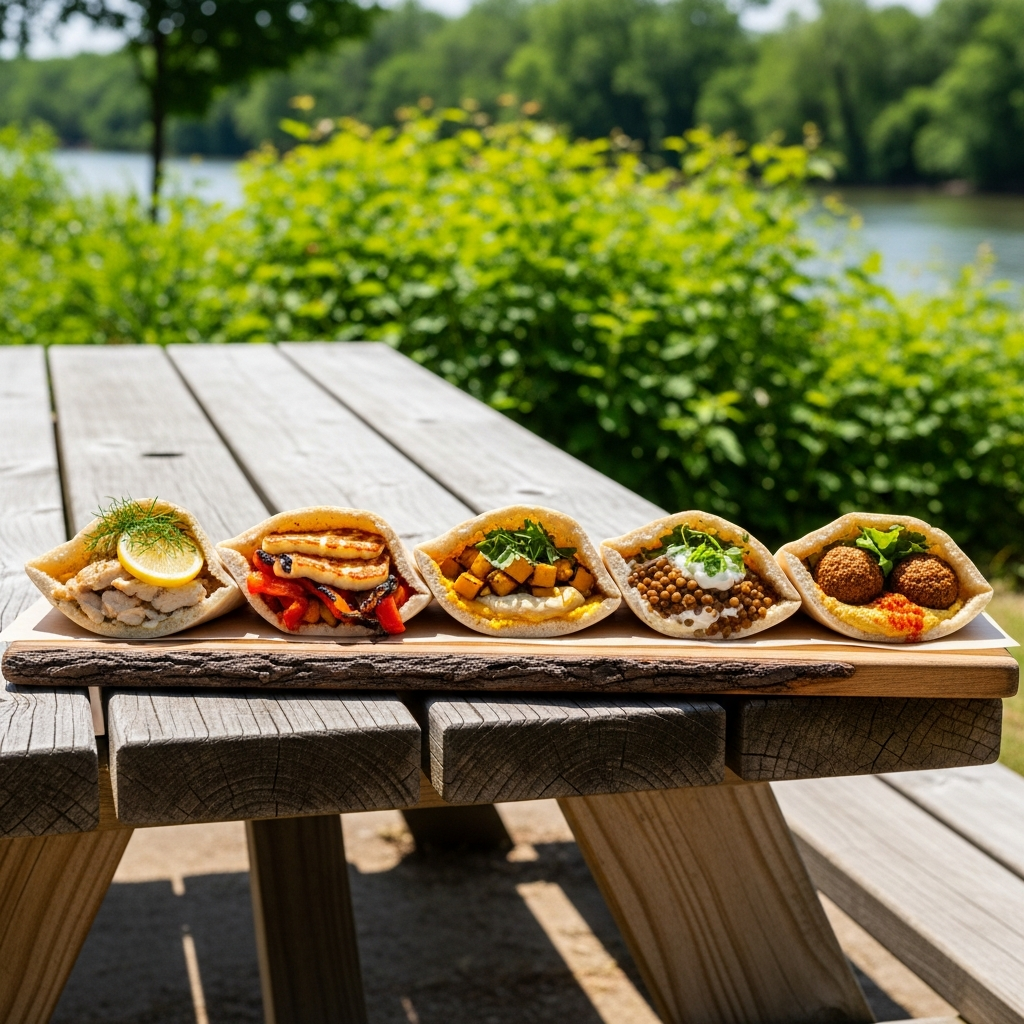
Start with a base that anchors moisture: yogurt, hummus, or tahini. Next, add crisp elements—lettuce, cucumbers, radishes, or slaws—to keep the sandwich from feeling soft throughout. Then bring in your main character: grilled chicken, falafel, roasted vegetables, or spiced beef. Finish with sparks of flavor—pickled onions, fresh herbs, a squeeze of citrus, or a pinch of sumac. The order matters because it manages moisture and movement; you want each bite to deliver a little of everything without breaking the pocket.
Temperature contrast elevates even simple fillings. Layer hot components against cool sauces, and add room-temperature vegetables at the end. That balance is what makes pita sandwiches endlessly interesting and satisfying.
From Farmer’s Market to Pocket
Naperville’s markets are a playground for pita lovers. In late spring, tender greens and early radishes bring peppery crunch. Summer crowds your options with tomatoes, peppers, cucumbers, and herbs. Fall supplies roots and squashes ready for roasting. Building sandwiches around what’s fresh keeps meals dynamic and local. It also makes your sandwiches look beautiful—vivid colors tucked into a soft, warm frame.
Buying produce locally also changes your pace in the kitchen. You begin with the question, “What looks irresistible today?” and let the pita pocket translate that answer into dinner. It’s a creative constraint that never feels limiting.
Protein Choices That Play Well with Pita
Grilled chicken is a classic for a reason; it’s forgiving, flavorful, and friendly to sauces. But there’s a wide world beyond it. Falafel adds crunch and fragrance. Roasted chickpeas offer a quicker path to plant-based heft. Thinly sliced steak, well-rested after grilling, pairs beautifully with tahini and herbs. For seafood nights, flake grilled salmon into the pocket with cucumbers and dill for a bright, summery feel. Each protein asks for a slightly different balance of acids and creams, which keeps your sandwiches varied even when the structure stays the same.
When I’m brainstorming, I often look to regional inspirations for flavor maps. Skimming a tempting shawarma menu helps me pair spices, pickles, and sauces in ways that feel both familiar and new. Take those cues, then tailor them to the produce and appetite in front of you.
Make-Ahead Strategies for Busy Days
Pita sandwiches thrive on components you can prep in advance. Roast a tray of vegetables, cook a pot of grains, blend a sauce, and wash your greens. On weeknights, you’re a few minutes from a composed meal: rewarm what’s meant to be hot, layer in the crisp and cool, and finish with herbs and acid. I like to keep a small jar of pickled onions in the fridge; their swift tang brings sandwiches into focus instantly.
For packed lunches, line the pita with a dry leaf of lettuce as a moisture barrier, then add sauces and warm items closer to eating time. Wrap tightly; the pocket’s design already buys you time, but good wrapping keeps everything aligned.
Entertaining with a Pita Bar
Set a table with warm pitas, a couple of proteins, bowls of vegetables, and a trio of sauces, and you’ve built a low-stress gathering that invites play. Guests assemble their own and discover combinations you might not think to serve. The format suits Naperville’s easygoing hospitality—gracious but not fussy. Keep the first few sandwiches moving so the room fills with the aroma of warm bread; after that, the meal runs itself.
Frequently Asked Questions
How do I keep pita sandwiches from getting soggy?
Use a moisture-absorbing base like hummus or yogurt, and add watery vegetables close to serving. Line with a lettuce leaf if packing ahead. Warm pitas hold up better; they’re more pliable and less prone to cracking under saucy fillings.
What are good vegetarian options that still feel hearty?
Falafel, roasted cauliflower, spiced chickpeas, and grilled mushrooms all provide satisfying substance. Pair with crisp greens, herbs, and a creamy sauce to round out texture and richness.
Can I use whole-wheat pitas without losing delicacy?
Yes. Choose well-baked, properly hydrated whole-wheat pitas. Warm them briefly before filling to boost pliability. Balance their nutty flavor with bright acids and fresh herbs.
How should I reheat pitas for sandwiches?
Wrap in a slightly damp towel and warm in a low oven, or place on a hot skillet for a few seconds per side. The goal is soft, not toasted, so the pocket stays flexible and strong.
What sauces pair best across seasons?
Yogurt-garlic in spring and summer, tahini-lemon year-round, and a warm spiced tomato or pepper sauce for fall and winter. A simple squeeze of lemon and sprinkling of herbs can elevate any combination.
Any tips for feeding a crowd?
Prep components ahead, keep pitas warm in a towel-lined basket, and set up a logical flow: bases first, then proteins, vegetables, and finishing touches. Encourage guests to build as they like—it becomes the entertainment as much as the meal.
How can I add crunch without overpowering the filling?
Use thinly sliced cucumbers, radishes, or slaws lightly dressed. They deliver texture without heavy weight. Sprinkle a pinch of toasted seeds at the end for a subtle crisp note.
What’s the best way to transport pita sandwiches?
Wrap tightly in parchment or foil, seam side up, and keep cool if traveling. Add delicate herbs at the destination. The pocket’s design resists spills, making it a commuter’s best friend.
Ready to Build Your Next Great Sandwich
Let the Naperville seasons guide your pita sandwiches and trust your palate for the details—crunch, cream, spice, and bright acidity. Keep warm pitas on hand, prep a few versatile components, and let each pocket become a small canvas for the moment you’re in. If you want a dose of flavor inspiration to spark tonight’s combo, browse this tempting menu and start assembling with confidence.