
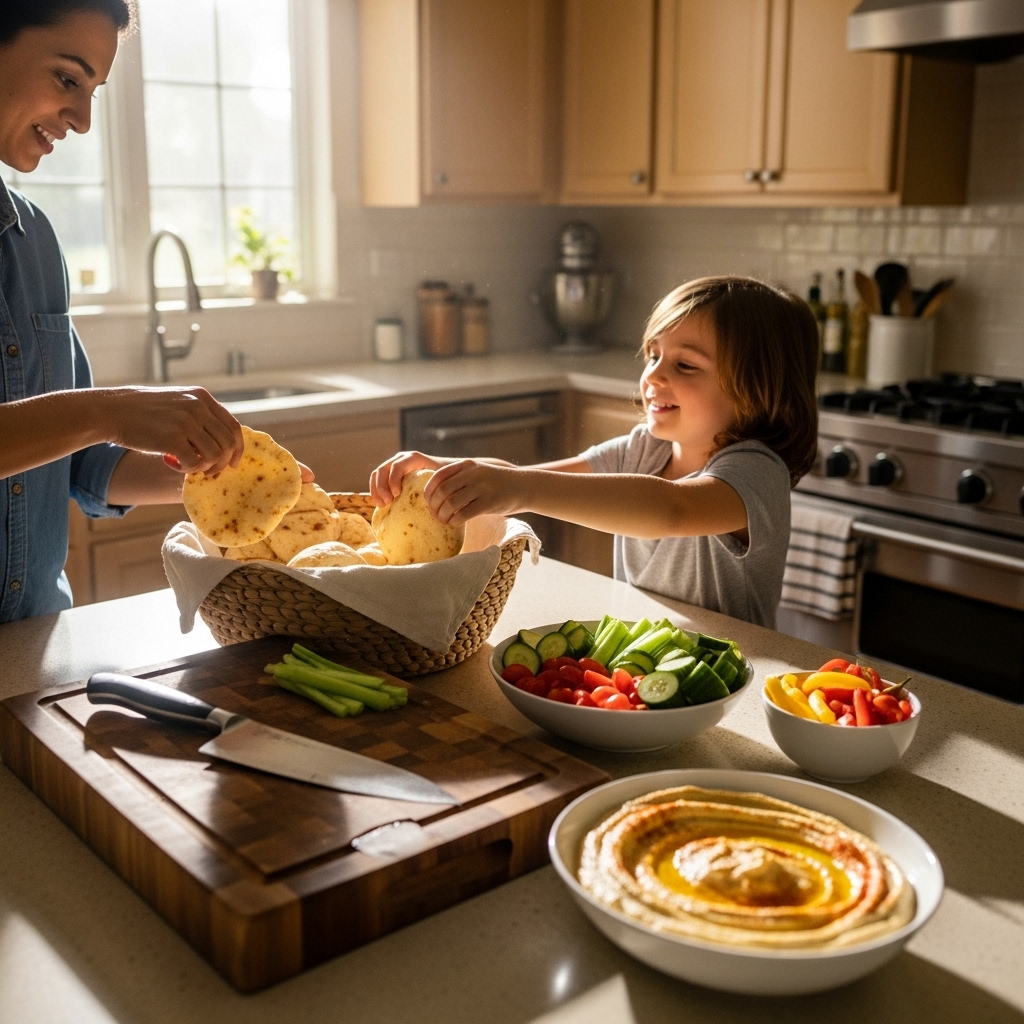
In Naperville, Illinois, where weeknights can juggle homework, sports practice, and a quick walk along the Riverwalk, fresh pita bread has quietly become a pantry staple that makes family meals easier and more enjoyable. When pita is truly fresh—soft, fragrant, and pliable—it transforms simple ingredients into satisfying dinners, school lunches, and weekend snacks. The difference between a newly baked pita and a stale one is dramatic: fresh pita bends without tearing, reheats to a gentle puff, and carries flavors with a clean, wheat-forward aroma. That reliability helps households build meals quickly and confidently, whether you’re assembling a wrap at the kitchen counter or laying out a spread for neighbors after a Saturday morning game.
Freshness isn’t just a culinary preference; it’s a practical tool for making family eating habits healthier and more sustainable. A fresh pita holds crisp vegetables, juicy proteins, and lively sauces without disintegrating, encouraging balanced portions and a colorful mix of ingredients. It can also spark dinner ideas when you’re short on time. A look at a Mediterranean-inspired menu can remind you how well pita pairs with grilled meats, tangy salads, and herbaceous spreads—then you can recreate those combinations at home with what’s already in your fridge.
What “fresh pita” really means
Ask any home cook who relies on pita and they’ll tell you: the signs of freshness are unmistakable. A newly baked pita feels pillowy and slightly warm, with a gentle aroma of toasted wheat. When you fold it, it flexes without cracking. If you warm it briefly, it may puff softly, a sign that the interior steam is still lively and the structure is intact. By contrast, a stale pita can feel rigid at the edges, dry across the surface, and less fragrant. It may tear when you try to open the pocket, or crumble when you take a bite. Those textural cues matter because they influence how well the pita supports your fillings and how enjoyable the meal feels from first bite to last.
In Naperville households, these distinctions play out in daily routines. A fresh pita means a faster school-morning assembly line: spreads glide on easily, vegetables tuck neatly into the pocket, and kids can pick up their lunch without it falling apart. For working parents, fresh pita is the difference between a smooth five-minute dinner and a frustrating scramble. When the bread cooperates, you can focus on flavor—lemon, garlic, herbs, crisp cucumbers—rather than problem-solving around tears or dryness.
Why freshness supports healthier eating
Fresh pita naturally encourages better choices. Because it’s soft and accommodating, you can fill it with crunchy lettuce, diced tomatoes, and slices of grilled chicken or roasted vegetables. Those textures shine when the bread is pliable, making vegetables and lean proteins feel more appealing. A stale pita, on the other hand, tempts you to add more sauce or oil to compensate for dryness, or to abandon the pocket entirely and reach for less-balanced alternatives. Freshness, in other words, sets the stage for good habits.
There’s also a psychological component. A warm, fragrant pita makes the kitchen smell inviting and signals comfort without excess. When families gather for a quick dinner—kids recounting highlights from the day, parents catching up between tasks—the tactile pleasure of tearing into a soft pita can make nutritious meals feel celebratory. That subtle shift can be the difference between a forced “eat your vegetables” moment and a genuinely enthusiastic plate.
How to identify and preserve freshness
Finding fresh pita is the first step; keeping it fresh is the second. When you buy pita, look for packages that feel soft to the touch and show minimal condensation inside, a sign they were cooled properly. The pitas should flex easily if you gently bend the edge. At home, store them in a cool, dry spot if you’ll use them within a day or two, then move extras to the freezer, pressing out excess air and sealing tightly. Freezing preserves texture remarkably well when done promptly, and a quick thaw on the counter followed by a light reheat can restore that just-baked feel.
Reheating is both art and science. For Naperville kitchens, the easiest technique is a dry skillet preheated over medium heat. Warm each side for 30 to 45 seconds until the surface softens and tiny bubbles or a gentle puff appear. An oven set to a moderate temperature also works; wrap the pita in foil to keep it from drying out. Avoid microwaving for too long—it can make the bread tough as it cools. With a light hand, you can revive yesterday’s pita into something that tastes freshly made.
Family meals made easier
Fresh pita simplifies weeknight dinners because it plays well with leftovers. Roast chicken turns into a lemon-and-herb wrap; last night’s grilled vegetables become a colorful pocket with yogurt and mint; a can of chickpeas transforms into a quick hummus to spread across warm pita halves. Because the bread is soft and reliable, you can assemble these meals quickly without worrying about tears or stale edges. For parents, this means more time around the table and less time troubleshooting.
Kids also tend to love the interactive aspect of building their own pitas. Set out bowls of sliced cucumbers, tomatoes, shredded lettuce, and simple proteins. Let each child assemble a combination they’re excited to eat, guiding them toward a mix of colors and textures. When the bread is fresh, the experience feels special—even if the fillings are basic. That pattern supports adventurous eating by making vegetables and herbs a regular, positive part of the meal.
Entertaining with confidence
Naperville neighborhoods have a friendly culture of block parties, potlucks, and casual get-togethers. Fresh pita is a host’s ally in these settings because it’s both humble and crowd-pleasing. You can warm a stack just before guests arrive, wrap it in a clean kitchen towel to keep it tender, and place it beside a spread of grilled meats, salads, and dips. People can assemble plates at their own pace, and the bread stays inviting throughout the evening. That flexibility is especially helpful when guests arrive on different schedules, as often happens during busy sports seasons.
For more formal gatherings, fresh pita elevates the table without extra effort. Pair it with vibrant sides—chopped salads, roasted vegetables, tangy slaws—and a savory main. Because fresh pita enhances rather than competes, it highlights the freshness of the rest of your meal. And when conversation flows and plates linger, pita’s forgiving texture holds up, discouraging the sogginess that can occur with heavier breads.
Freshness across the seasons
Illinois weather has a way of shaping how we eat. In winter, when the wind sweeps across open fields toward Naperville, fresh-warmed pita offers comfort that doesn’t feel heavy. In summer, when families crowd the Riverwalk or head to neighborhood parks, a soft pita with chilled fillings tastes refreshing. The bread becomes a steady companion to seasonal produce: ripe tomatoes and cucumbers in July, roasted squash and peppers in October, crisp cabbage and pickled onions in January. With each shift in the calendar, the same fresh pita adapts seamlessly.
That seasonal flexibility makes it easier to shop and cook intentionally. You can plan around what looks best at the market, knowing that fresh pita will tie ingredients together beautifully. The same bread that supports a citrusy, herb-forward chicken wrap in spring can carry a hearty, spiced vegetable mix in fall. The throughline is texture—when pita is fresh, every combination feels cohesive.
Midweek inspiration when you need it
Every household encounters ruts. By Wednesday evening, it’s easy to default to something forgettable. Fresh pita helps you break that pattern. Warm a few breads, open the fridge, and think in textures: something creamy, something crunchy, something bright, something protein-rich. If you want a creative nudge, browse a Mediterranean menu to see which pairings excite you—then remix those ideas with what you already have. This low-stress approach keeps dinner interesting while sticking to real-life constraints.
When children see this flexibility week after week, they learn that good food can be both fun and uncomplicated. The ritual of warming the pita, assembling, and sharing can become a small anchor for the family rhythm, even on nights when schedules are tight and everyone is a little tired. That’s the quiet power of freshness in a household: it lowers friction so the meal itself can take center stage.
Troubleshooting common freshness pitfalls
Even with best practices, you might run into hiccups. If your pita dries out, try brushing it lightly with water and warming it briefly in a skillet or wrapped in foil in the oven; the gentle steam will rehydrate the surface. If the pocket tears easily, consider warming the pita before slicing; heat makes it more elastic. If you notice off flavors, store pitas away from strong-smelling foods and use airtight packaging to prevent absorption. With a few simple adjustments, you can keep pita tasting as fresh as the day you bought it.
Finally, remember that freshness is time-sensitive. If you know you won’t use all your pitas within two days, freeze them as soon as you get home. Label the package with the date and thaw only what you need. That habit preserves quality and ensures your family gets the soft, fragrant bread that makes healthy meals easy.
Frequently Asked Questions
How long does fresh pita stay soft at room temperature?
Ideally, enjoy it within one to two days. After that, quality starts to decline. If you need more time, freeze the pita promptly and reheat gently to restore softness.
What’s the best way to reheat without drying out?
A dry skillet over medium heat for under a minute per side works well. In the oven, wrap pitas in foil to trap moisture. Avoid overheating; gentle warmth is key to pliability.
Should I refrigerate pita to extend freshness?
Refrigeration can dry bread out. For longer storage, freezing is the better option. Keep a small portion at room temperature for immediate use and freeze the rest in airtight packaging.
How do I prevent the pocket from tearing?
Warm the pita slightly before cutting to increase elasticity. Use a sharp knife and avoid overfilling. Layer spreads first to create a smooth interior surface for other ingredients.
Can fresh pita support gluten-conscious diets?
Those who avoid gluten should look for certified gluten-free alternatives that mimic the texture of traditional pita. The freshness principles—gentle reheating and proper storage—apply regardless of the flour base.
When you keep fresh pita on hand, weeknight meals come together quickly, lunches feel easier, and family eating becomes both healthier and more joyful. Warm a stack, set out your favorite fillings, and let the aroma gather everyone in the kitchen. For flavor ideas that reflect the Mediterranean combinations Naperville families love, glance at a local menu, then make it your own with the ingredients you already trust and enjoy.