
Authenticity Meets Local Flair in Naperville
Walk along the Riverwalk on an early evening and you’ll catch the kind of breeze that makes the whole town feel like a backyard gathering. That’s the feeling I bring into my kitchen when I make shawarma at home in Naperville: warm, welcoming, and grounded in the rhythms of our community. Authentic shawarma isn’t just about a checklist of spices; it’s about the memory of aromas that linger, the crisp of pickles against a soft flatbread, and a well-loved skillet that’s seared more family dinners than you can count. If you want to compare your cooking plan to what local kitchens are building, take a glance at a thoughtfully crafted shawarma menu and let that guide your own sense of balance and variety as you begin.
When people ask what makes shawarma truly “authentic,” I always say it starts with respect for the layering of flavors. The traditional rotisserie stack is gorgeous, yes, but home cooks can capture the same spirit by marinating thoughtfully and cooking in batches that create caramelized edges. Authenticity lives in that play between warmth and brightness: cumin and coriander kicking gently in the background while lemon and vinegar make the whole dish feel alive. In Naperville, we have access to excellent produce, good butcher counters, and specialty spice shops, which means you can shop like a pro and cook like one too, even without the big vertical spit in your kitchen.
Understanding the Shawarma Blueprint
Before we talk local, let’s set the baseline. Shawarma is, at heart, a dance between spice, aroma, and technique. You’ll typically find a backbone of cumin, coriander, paprika, and black pepper. Into that, you fold warming notes: cinnamon or allspice if you crave a deeper echo, and sometimes a pinch of ground cardamom to make the fragrance linger. Garlic and onion are non-negotiable. Acidity—usually lemon, sometimes a splash of vinegar—brightens and tenderizes, while oil supports even cooking and helps those spices bloom. That’s the blueprint. Everything else is your accent color.
If the blueprint is constant, the canvas can change with the seasons. Here in Naperville, winter invites longer marinades and cozier cooking methods—cast-iron on the stove, slow roasts in the oven—while summer begs for the grill, where a hint of applewood or hickory joins the chorus. The key is to adapt technique without losing that classic shawarma identity: thin slices, plenty of surface area, and enough heat to kiss the edges brown while the center stays tender.
Shopping Like a Local in Naperville
One of the joys of living here is how easy it is to shop for great ingredients. The Naperville Farmers Market is a treasure in warm months, and the produce aisles around town make it simple to find firm cucumbers for pickles, ripe tomatoes that still snap with acidity, and fresh herbs. For meat, look for butchers who understand fat balance; a little marbling keeps your shawarma juicy. I like to talk through my plan with the person behind the counter—“thin slices, quick sear, high heat”—so they know I want even, manageable pieces. It’s a small conversation that often yields exactly the right cut.
Spices are where you can really make the local flair shine. Buy them fresh, smell them, and don’t be shy about grinding some whole spices at home. Naperville’s diverse community means you’ll find shelves stocked with everything from sumac to Aleppo pepper. Sumac, in particular, brings a lemony brightness that feels like sunshine on the Riverwalk after a spring rain. A little sprinkle in the marinade or on the finished wrap can transform the profile without overpowering the other flavors.
Marinade Fundamentals, With a Naperville Twist
For a balanced marinade, think of it as three pillars: spice warmth, acidic lift, and fatty cushion. The warmth comes from cumin, coriander, paprika, and your chosen “secret” note—maybe a hint of allspice or cinnamon. The acidic lift is lemon juice, ideally fresh, supported by a small splash of red wine vinegar or apple cider vinegar. The fatty cushion is neutral oil, like avocado or light olive oil, which helps the heat transfer evenly and carries the spice into every crevice of the meat. Salt rounds everything out. That’s your classic foundation.
Here’s where the Naperville flair comes in: seasonal herbs and garden-fresh aromatics. If you have thyme or oregano thriving in a backyard pot, bruise a sprig and stir it in. If summer tomatoes are bursting, use a spoonful of their pulp to add gentle acidity and a whisper of sweetness. In the late summer and early fall, local garlic can be incredibly potent; roast a couple of cloves and mash them into the marinade for a softer, deeper perfume that plays beautifully with the smokiness you’ll coax out on the grill or skillet.
When you’re mapping out your flavor plan, it can help to look at what local kitchens are pairing with their wraps and plates. Mid-recipe, when you’re adjusting spice levels and thinking about your sides, take inspiration from a curated shawarma menu to sense-check whether you want a garlicky punch, a tangier profile, or something herb-forward that leans on parsley, mint, and sumac. Use that as a compass, not a rule book, and remember that your marinade can be split into two bowls so you can try a slightly different ratio in each batch.
Techniques for Home Kitchens
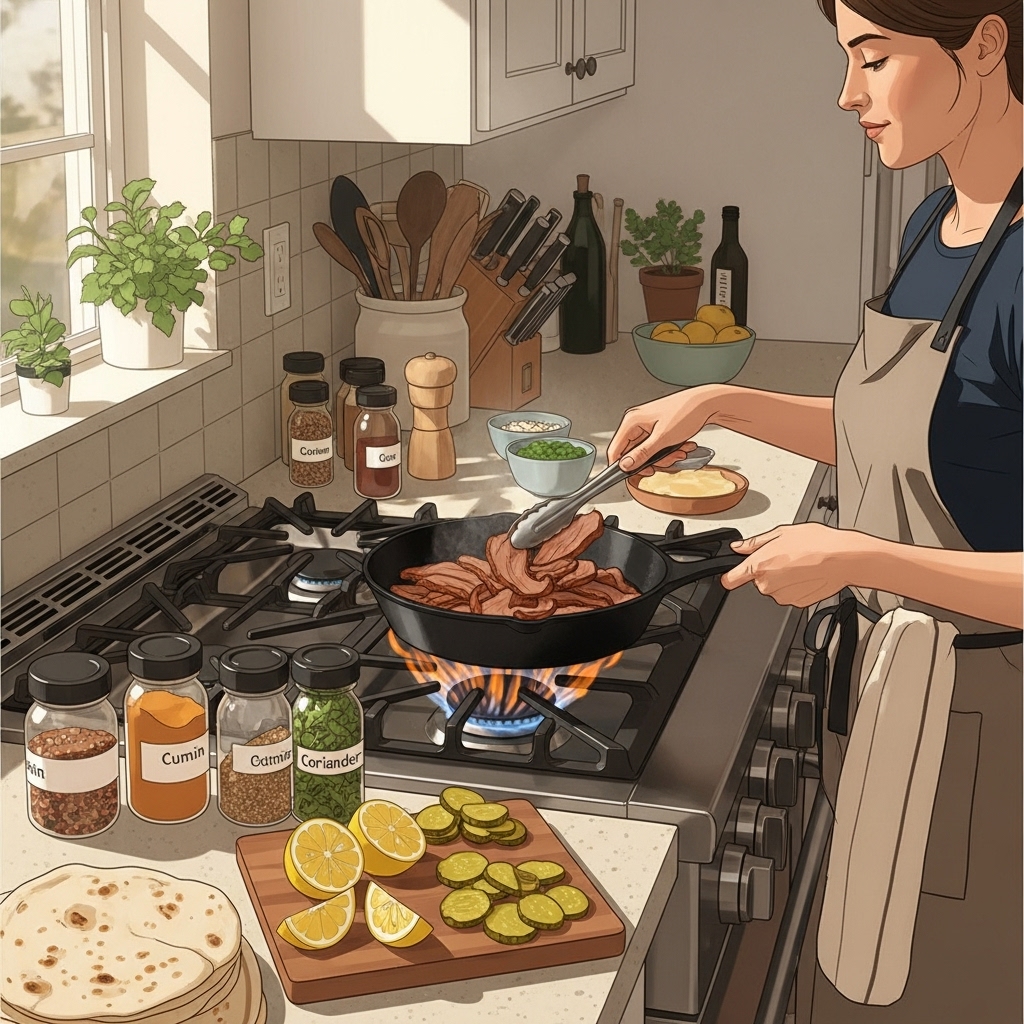
At home, you’re after high heat and speed. The ideal is thinly sliced meat that sears hard on the outside while staying succulent inside. Cast-iron pans earn their keep here. Preheat until a drop of water skitters across the surface, then add a measured amount of oil and your marinated slices, giving each piece space. Crowding the pan steams the meat; spacing delivers those mahogany edges. Work in batches and keep the cooked slices on a warm plate tented with foil. Layering hot slices builds that signature shawarma tenderness—juices mingle, edges soften, and the aroma becomes outrageous in the best way.
If you prefer the oven, use a wire rack set over a foil-lined sheet to encourage browning. A brief blast of high heat near the end—broiler, top rack—mimics the rotisserie’s radiant heat. Watch closely. The goal is color without drying. If you own an outdoor grill, you’re set up for summer greatness. Cook on medium-high with the lid down to trap heat, and let the edges darken slightly. Smoke from charcoal or wood chips adds real depth. This is how you translate the visual drama of a vertical stack into the everyday rhythms of a Naperville backyard.
Building the Plate
The difference between good and great shawarma often lives in what surrounds the meat. I like a creamy garlic sauce that’s more airy than heavy—yogurt lightens the texture while still delivering that assertive bite we all crave. Homemade pickles are worth the minimal effort: thinly sliced cucumbers, a brine just salty enough, a touch of vinegar, and a little sugar to balance. Lettuce adds freshness, tomatoes add juiciness, and a scatter of parsley or mint brightens every bite. If you have time, warm your flatbreads directly over a burner for a few seconds; the char marks add another subtle layer of flavor.
Don’t forget texture. Nuts like toasted pine nuts or slivered almonds can be used sparingly for a bit of crunch, particularly if your shawarma leans toward a bowl presentation. If you’re wrapping, keep your fillings in thoughtful proportions. You want every bite to deliver seasoned meat, fresh vegetables, creamy sauce, and tart pickle. Naperville tastes lean balanced: not drowning in sauce, not shy on seasoning, just right.
Seasonal Tweaks and Local Pairings
In summer, I’ll add grilled peppers and onions for a sweet-smoky note. In late fall, roasted squash cubes tossed with a dusting of sumac play surprisingly well with shawarma spices, especially when served in a bowl over rice. If you’re heading to a picnic at the Riverwalk, pack your components separately and assemble on-site; the wraps hold up better and keep their textures distinct. For beverages, something zippy and citrusy stands up well to the richness. And for a local nod, consider a quick cucumber-mint cooler when the heat has that mid-July intensity.
When cold weather sets in, oven-roasted shawarma becomes a cozy ritual. The whole house fills with the fragrance of spices mingling with caramelizing onions. I’ll serve it with roasted root vegetables and warm pitas, alongside a bowl of garlicky yogurt and a spoonful of pepper paste. Naperville winters ask for that kind of deeply satisfying plate—a quiet antidote to gray skies and icy sidewalks that makes everybody lean a little closer over the table.
Troubleshooting Texture and Flavor
If your shawarma tastes flat, it probably needs salt or acid. Start with a small pinch of salt to wake everything up, then add a few drops of lemon. If the seasoning is right but the texture is tough, you may need a longer marinade or thinner slices, and you might be overcrowding the pan. Heat matters: too low and you’ll steam, too high and the spices burn. Find that sweet spot where the surface sizzles confidently but not aggressively. If your garlic sauce feels heavy, whisk in a spoonful of cold water to lighten it without diluting the flavor too much.
Another common pitfall is losing the spice character once the meat hits the heat. That’s a sign you need to bloom your spices more thoroughly—mix them with a bit of oil, lemon juice, and crushed garlic before adding the rest of the marinade components. Allow at least an hour for the flavors to settle into the meat, though overnight is ideal if your schedule allows. The reward is a deeper, rounder flavor that holds up to high heat and pairs beautifully with crisp vegetables and tangy pickles.
Hosting the Naperville Way
When I host friends, I set up a small assembly station. It encourages people to build their perfect bite and makes the meal feel interactive without any fuss. I put the meat in a warm dish, the breads in a towel-lined basket, and the sauces in easy-to-scoop bowls. The key is pacing: cook in batches so the meat stays hot and juicy, then replenish the board as people assemble. The conversation tends to flow effortlessly when the food takes on a social, hands-on rhythm, which is precisely the spirit that makes shawarma such a great fit for our community gatherings.
If you want to shape your spread around a theme, ask yourself whether your audience leans garlicky, herbaceous, or smoky. In Naperville, I’ve noticed folks love a balance that still feels vivid: enough garlic to announce itself, enough herbs to lift, enough acid to cut the richness. Building your plate in this town is about respecting that equilibrium while nudging it toward your personal taste. That’s local flair in action.
FAQ
Q: What cut of meat works best for home shawarma?
A: For poultry, boneless, skinless thighs give the juiciest results and tolerate high heat. For beef or lamb, choose cuts with light marbling and slice thinly across the grain. Communicate with your butcher so they understand you’re searing fast and want manageable, even slices.
Q: How long should I marinate?
A: Give poultry at least one hour, though four to six hours deepens flavor. Beef and lamb benefit from a longer soak—overnight if possible. If you’re short on time, increase surface area by slicing thinner and massage the marinade into the meat for a minute or two to help it penetrate.
Q: Can I make a good garlic sauce without specialized equipment?
A: Absolutely. Whisk together crushed garlic, salt, lemon juice, and a spoonful of yogurt or mayo, then thin with cold water to your preferred texture. If it breaks, keep whisking and add cold water a teaspoon at a time; it usually comes back together.
Q: What should I do if I can’t grill outdoors?
A: Use a heavy skillet or a broiler to simulate high direct heat. A preheated cast-iron pan is reliable in every season, and the broiler’s top-down blast helps achieve those crisp edges that make shawarma irresistible.
Q: How do I keep wraps from getting soggy?
A: Warm the bread just before assembling, layer sauce lightly, and keep tomatoes and pickles well-drained. If transporting, pack components separately and assemble when you arrive. It’s the small details that preserve texture.
Q: How do I incorporate local produce?
A: Use seasonal herbs in the marinade, add grilled peppers or zucchini in summer, and fold in roasted root vegetables in cooler months. Naperville’s seasonal variety makes it fun to tailor shawarma to the moment.
Bring It All to the Table
Nights in Naperville have their own cadence—neighbors waving from porches, kids running across lawns, the Riverwalk buzzing in the background. Shawarma fits that cadence beautifully. If you’re ready to cook with confidence, plan your spices, marinate with intention, and stay present at the stove so you can coax those edges to a perfect bronze. And if you want a spark of inspiration as you gather ideas for your spread, explore a local shawarma menu, then bring that energy home. Fire up the pan, warm the bread, and invite everyone to the counter. Dinner’s ready—and it tastes like Naperville.