
Why Juicy Chicken Shawarma Belongs in Your Naperville Kitchen
There’s a moment when chicken shawarma crosses from good to unforgettable: the first bite lands with a char-kissed edge, then gives way to tenderness so juicy it feels like a small miracle. That’s the target for home cooks in Naperville, where our kitchens see blazing July afternoons, blustery January nights, and every kind of dinner plan in between. Juicy shawarma is a practice, not a mystery. Start by imagining the experience you want—bright, garlicky, gently spiced—and then reverse engineer it. If you need a nudge to visualize the destination, take a peek at a well-balanced shawarma menu to map out flavors, sauces, and sides that you can recreate at home.
Whenever I show friends how to make chicken shawarma in their own kitchens, I start with texture. Breast meat is forgiving when sliced thinly and marinated with care, but thighs are the gold standard for juiciness. They love high heat, they stay succulent, and they carry spice beautifully. From there, it’s all about building flavor in layers: blooming spices in oil, stirring in lemon, whisking garlic until it sings, and marinating just long enough for the whole mixture to seep in without turning the texture mushy. Patience pays, but so does restraint.
The Naperville Pantry: What You Need on Hand
To generate that signature shawarma warmth, keep cumin, coriander, paprika, and black pepper close by. A pinch of allspice or cinnamon adds a whisper of depth; don’t overdo it. Fresh garlic is essential, and onion—grated or very finely minced—brings sweetness that balances the acidity of lemon juice. A neutral oil like avocado or a light olive oil helps everything move across the pan. I like to keep sumac handy for finishing; it adds a zesty lift that reminds me of the snap in the air along the Riverwalk after a spring storm.
For sides and garnishes, Naperville’s markets make it easy: crisp cucumbers for pickles, tomatoes that actually taste like tomatoes, parsley that pops, and yogurt that’s thick enough to anchor a garlic sauce without feeling heavy. Fresh pitas or flatbreads warmed over a burner for a few seconds can make the whole plate feel restaurant-level. Even a quick homemade pickle—salt, vinegar, water, a pinch of sugar—transforms the experience. These small upgrades are how a Tuesday dinner becomes a mini-celebration.
Marinade Engineering for Maximum Juiciness
Think of your marinade as a balance beam with three anchors: spice warmth, acid brightness, and fat for lubrication. For four chicken thighs, start with a generous teaspoon each of cumin and coriander, a teaspoon of paprika, half a teaspoon of black pepper, and a pinch of allspice or cinnamon. Add two to three cloves of crushed garlic, the juice of a lemon, a splash of vinegar if you like it extra tangy, a healthy pinch of salt, and two tablespoons of oil. Whisk it vigorously to emulsify slightly; you want the oil and lemon to mingle so the spices distribute evenly.
Marinate at least one hour in the fridge; overnight is fabulous but not mandatory. The trick is surface area. Slice the chicken into thin strips before marinating so more of it meets the spice and lemon. That way, even a short marinade pays dividends. When you’re midway through prep and wondering whether to skew savory or bright, it can help to cross-check with a thoughtfully composed shawarma menu to decide if you want a heavier garlic profile, more herbs, or an extra pinch of heat from Aleppo pepper.
Stovetop, Oven, or Grill: Choosing Your Path
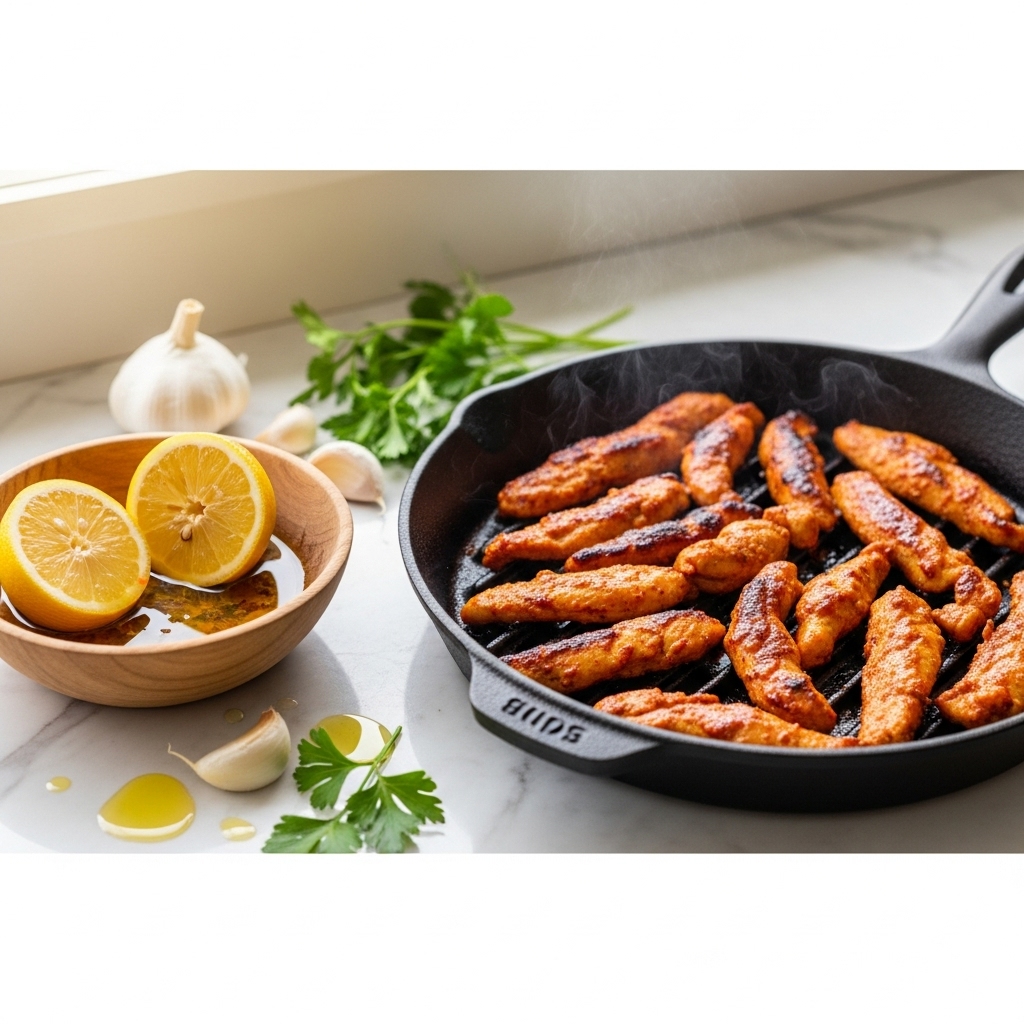
On the stovetop, cast-iron is king. Preheat until a droplet of water dances, add oil, then lay in your marinated strips in a single layer. Don’t crowd the pan; work in batches. You’re aiming for deep color on the edges while the interior stays moist. Resist the urge to flip too soon. Let the first side build a crust, then turn once, maybe twice. Transfer cooked pieces to a warm plate and tent lightly. The carryover heat gently finishes the middle while preserving juiciness.
For the oven, use high heat and a rack over a sheet pan so airflow can crisp the edges. A quick broil at the end mimics the rotisserie effect. Keep a close eye; broilers are enthusiastic friends. If you grill, medium-high heat with the lid closed works wonders. The slight kiss of smoke adds character that tastes like summer evenings near Centennial Beach. Just watch for flare-ups and rotate pieces so the caramelization develops evenly without scorching.
Garlic Sauce and Other Essential Accents
A creamy garlic sauce is the shawarma’s best friend. Whisk together crushed garlic, lemon juice, a pinch of salt, and thick yogurt. Drizzle in a tablespoon of cold water to lighten. If you prefer a more assertive bite, add a touch of raw garlic at the end; if you want it mellow, roast a clove and mash it in. For crunch, make a quick cucumber pickle, and for brightness, chop parsley and mint together so the herbs feel integrated rather than scattered.
Don’t underestimate the bread. Whether you’re using pita, laffa, or your favorite flatbread, warming it briefly over a burner gives just enough char to add flavor without making it brittle. Wrap the warmed breads in a towel so they stay pliable while you cook in batches. Every small detail—heat management, resting the meat, warm bread—adds up to juiciness you can taste.
Problem-Solving: Keeping It Juicy Every Time
If your chicken is drying out, you’re probably going too hot for too long or cutting the slices too thin. Thighs tolerate heat well, but they still deserve attention. Keep the pieces a bit thicker than deli meat, and let the pan do the work as you sear in stages. If flavor falls flat, bump the salt slightly or add an extra squeeze of lemon at the finish. If the spices taste raw, bloom them in a bit of oil before adding the lemon and garlic to the marinade; it’s a small step that deepens the whole dish.
Another trick for juiciness: rest the meat briefly after cooking. You don’t need a long wait—just a couple of minutes under a loose tent. Those juices settle, and the texture becomes remarkably tender. Once you start doing this every time, you’ll never skip it again. You’ll bite in and get that elusive balance: edges with character, centers that melt.
Serving in the Naperville Spirit
When I serve chicken shawarma at home, I like to energize the table with a few simple bowls: garlicky yogurt, chopped salad, pickles, and warm bread. People build their plates and tastes overlap in the best way. On summer nights, I take the spread outside and let everyone assemble wraps on the patio as cicadas hum in the trees. In winter, I bring the pan straight to the counter so the food feels immediate and generous. That’s the Naperville spirit—welcoming, unfussy, and full of flavor.
If you’re planning a weekend gathering, you can prep the marinade the day before, slice vegetables in the morning, and cook just before guests arrive. The whole process scales up easily, and because chicken thighs hold heat and moisture well, you won’t be caught playing catch-up while everyone’s hungry. You’ll have the time to pour drinks, look around, and enjoy the moment you created.
FAQ
Q: Can I use chicken breast instead of thighs?
A: Yes. Slice breasts thinly across the grain and avoid over-marinating. Keep heat high and cooking time short. A quick rest under foil helps retain moisture. Breasts won’t be as forgiving as thighs, but with care, they’re excellent.
Q: How long should chicken marinate?
A: One to four hours is great. Overnight is fine if the acid level is moderate. If you’re going long, reduce the lemon slightly and add it closer to cooking to protect texture.
Q: What if I don’t have a cast-iron pan?
A: Use any heavy skillet that holds heat well. Stainless steel works if properly preheated and lightly oiled. Nonstick pans are gentler but can still deliver color if you resist crowding and let the pieces sit undisturbed at first.
Q: How do I keep bread from tearing?
A: Warm it over a flame or in a hot, dry skillet for a few seconds per side, then stack and wrap in a clean towel so steam keeps it supple. Assemble wraps while the bread is still warm and flexible.
Q: What sides make chicken shawarma feel complete?
A: A creamy garlic sauce, a bright chopped salad with cucumbers and tomatoes, and crisp pickles. If you’re serving bowls, add rice or roasted potatoes for something heartier, and finish with a sprinkle of sumac for sparkle.
Bring the Flavor Home
There’s a confidence that comes from cooking shawarma well—knowing you can produce juiciness on demand, season boldly, and feed a table with ease. If you need a creative spark for pairings and sauce variations, browse a well-curated shawarma menu, then put your spin on it at home. Heat the pan, warm the bread, and gather everyone in the kitchen. Naperville nights are made for food that’s generous and alive with flavor, and chicken shawarma fits the moment perfectly.