
If you’ve ever wandered along the Riverwalk late on a breezy Naperville evening and felt inspired to cook something bright, herb-forward, and unmistakably fresh, this guide to an authentic Taboili salad is for you. In countless home kitchens across town—from historic homes near Naper Settlement to newer condos along Washington Street—the scent of parsley, lemon, and garlic drifts out on weeknights and lazy weekends. Taboili, a Levantine classic often spelled tabouli or tabbouleh, is the kind of dish that rewards patience, precision, and a love of produce. Before we dive in, if you want a little inspiration from a local Mediterranean favorite, take a peek at their menu as you plan what flavors you’ll pair with your salad tonight.
Authenticity in Taboili begins with respect for its core identity: a parsley-led salad with bright lemon, good olive oil, and a delicate support from bulgur wheat. This is not a grain salad with herbs as decoration; it is a herb salad that uses fine or extra-fine bulgur as a textural accent. The moment you understand that balance, everything else falls into place. When I walk through the Naperville Farmers Market early on a Saturday, I look for bunches of flat-leaf parsley that feel cool and perky to the touch. The leaves should be vividly green with a clean, peppery fragrance; any yellowing or limpness will translate to a dull salad.
Tomatoes do heavy lifting too, and our local markets are generous in summer. Choose Roma or vine-ripened tomatoes with a firm, juicy flesh that can be diced without dissolving. If you’re making Taboili in winter, cherry tomatoes become your best friend, offering concentrated flavor even when the season is quiet. Scallions provide a gentle onion note, but they shouldn’t dominate. And mint—cool, clear, and aromatic—amplifies the parsley rather than competing with it. Traditional cooks will tell you that mint’s quantity matters; too much and your salad turns into a mojito, too little and you’ll miss that moving, menthol brightness that makes Taboili sing.
Let’s talk bulgur. In an authentic preparation, fine bulgur is typically used without boiling. Instead, it’s rinsed and soaked briefly or even allowed to hydrate in the dressing’s lemon juice, absorbing flavor while softening to a pleasant, tender bite. If all you can find in Naperville is medium bulgur, don’t worry; a swift hot-water soak followed by careful draining and pressing between clean kitchen towels will produce the right texture. The important thing is to avoid a grain that overpowers or turns the salad heavy. Remember: Taboili is meant to feel buoyant, not starchy.
Of course, authenticity doesn’t mean rigidity. Naperville cooks have a knack for blending tradition with practicality. On weeknights, when time is tight, I wash and dry herbs in the morning, tuck them in the fridge wrapped in paper towels, and return to a crisp canvas in the evening. A salad spinner helps remove water, but I always finish by laying the leaves on a towel to air-dry for a few extra minutes. This little step prevents sogginess and keeps the dressing clinging instead of sliding off. Moisture control is one of the simplest ways to elevate home Taboili from good to gorgeous.
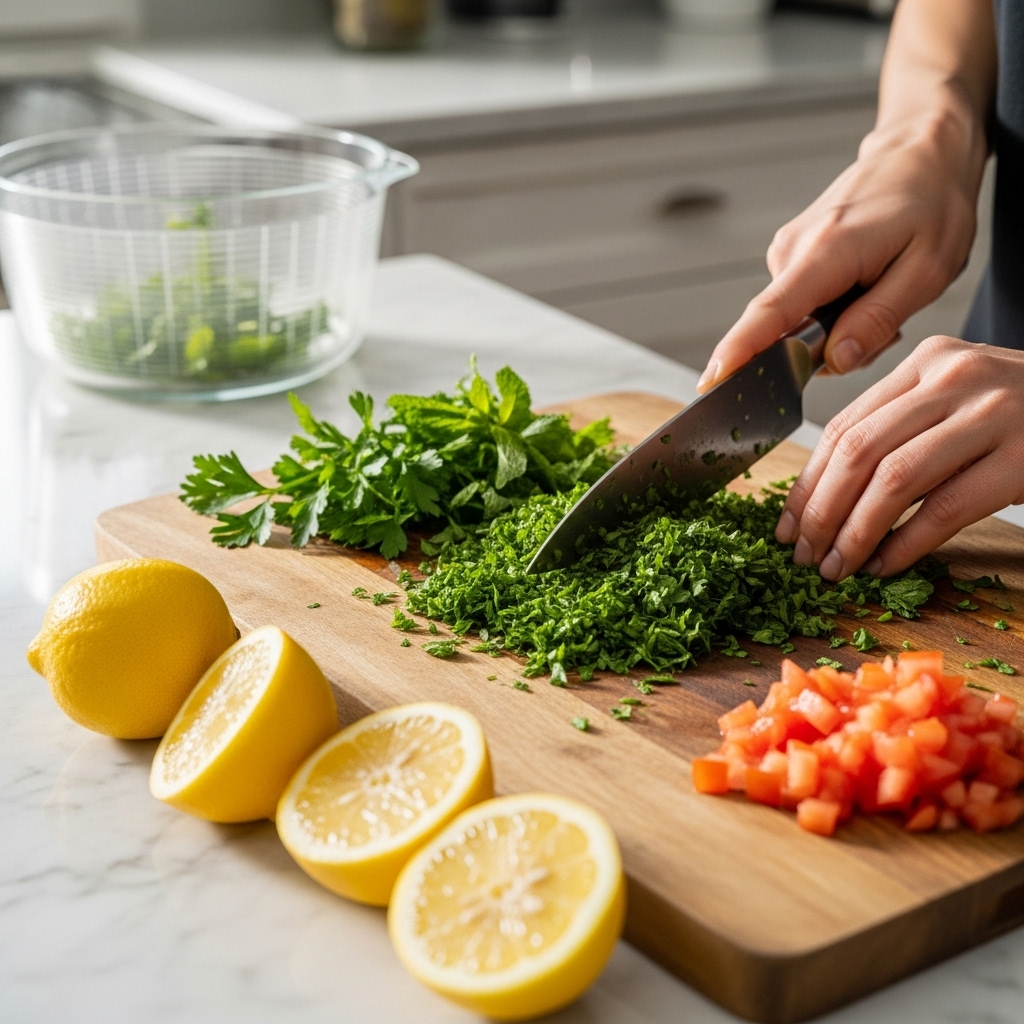
Chopping is its own craft. Authentic Taboili glitters with finely cut parsley and mint, never ragged or bruised. A sharp chef’s knife makes all the difference. I gather small handfuls of parsley, tuck my fingers, and slice in short, even strokes, aiming for confetti rather than shreds. The goal is small, uniform pieces that almost melt into the salad. When you cut tomatoes, favor a serrated knife for cleaner edges, and consider gently squeezing the pieces to remove excess water and seeds. Your bowl won’t fill with tomato runoff, and the dressing’s bright flavors won’t be diluted.
Speaking of dressing, the trifecta of lemon juice, extra-virgin olive oil, and salt is nonnegotiable. Start with more lemon than you think you need; Taboili should taste distinctly citrusy, with oil rounding out the edges. I mix the dressing in the bottom of a wide bowl, whisk briskly to emulsify, and then fold in the hydrated bulgur so it can drink those flavors first. After that, herbs and tomatoes join the party, followed by scallions and mint. Taste, rest, and taste again. A pinch of salt added at the end often reveals layers you didn’t know were hiding.
Resting time is essential. Fifteen to thirty minutes on the counter allows the ingredients to marry. If your kitchen is on the warm side, slip the bowl into the refrigerator, but serve at a cool room temperature rather than ice-cold. Cold dulls the lemon and flattens the mint; a gentle chill is enough to keep the salad crisp without muting its voice. While you wait, clear the counter, set out flatbreads, and gather small plates. I love presenting Taboili with crisp romaine leaves as edible spoons that add crunch without taking over.
Naperville has its rituals, and Taboili fits right in. For a picnic at Rotary Hill, I pack the salad in a shallow container, pressing a piece of parchment against the surface so condensation doesn’t gather under the lid. If I’m taking it to a backyard gathering near Huntington Estates, I dress the bulgur first and add herbs and tomatoes right before serving to keep everything lively. And when the weather turns, Taboili shares a table easily with oven-roasted chicken, grilled skewers, or a simple plate of olives and feta.
There are subtle ways to personalize your bowl without straying from tradition. A whisper of ground cumin can lend warmth in fall, while a sprinkle of Aleppo pepper adds a mellow glow without overwhelming the palate. Some Naperville cooks tuck in a small cucumber, peeled and seeded for less water. Others finish with a dusting of sumac for a tangy, ruby sparkle. Whatever you do, return to the core: parsley-driven, lemon-bright, and finely textured. If you’re planning a mezze night and want to explore pairings, browsing a Mediterranean menu can spark ideas for sides that highlight your Taboili rather than compete with it.
On technique, a few habits pay off again and again. Salt your tomatoes lightly and set them in a sieve while you prep the herbs; you’ll be surprised how much liquid they release. Spin your parsley and mint longer than you think necessary, then pat them dry. Measure lemon juice into a small glass and taste it—lemons vary wildly, and your dressing should be decisive rather than meek. When you fold the salad, use a wide spatula or clean hands, lifting from the bottom so you don’t compact the herbs. Taboili thrives on air and lightness.
For those weeknights when you want dinner in minutes, prepare a jar of pre-mixed dressing with lemon, olive oil, and a tiny hint of grated garlic. Garlic is potent; a little goes a long way, and raw garlic intensifies as it sits. If you prefer a softer note, slice garlic very thinly and let it soak in lemon juice for a few minutes before whisking in the oil. The acid will tame the bite without silencing the character.
In Naperville’s colder months, when tomatoes are less showy, I lean on cherry tomatoes and an extra dose of mint to lift the salad’s spirit. I’ll sometimes warm flatbread briefly in the oven and serve Taboili as a bright counterpoint to something roasted and cozy. The contrast is pleasant and keeps the salad feeling welcome year-round. If you miss summer’s sunshine, a pinch more lemon invigorates everything, much like the first thaw along the DuPage River after a late snow.
When entertaining, presentation matters. A wide serving platter shows off the tiny green flecks of herbs and the ruby of tomato, making each spoonful feel abundant. If you arrange a small ring of crisp romaine around the edges, guests can scoop without utensils and build little wraps on the spot. Taboili’s brightness plays well with savory companions—think grilled meats, roasted vegetables, or even a wedge of creamy labneh. It never shouts; it harmonizes.
Make-ahead strategy is simple. Chop the parsley and mint, spin dry, and refrigerate wrapped in paper towels inside a container. Hydrate bulgur separately and keep chilled. Dice tomatoes near serving time, drain briefly, then combine everything with the dressing just before guests arrive. This staggered approach protects texture. If leftovers survive the evening, they’re lovely the next day with an extra squeeze of lemon and a flicker of olive oil. The herbs will soften, but the flavors mingle in a way that invites a second lunch.
Common pitfalls tend to cluster around water and proportion. Too many tomatoes or under-dried herbs create a watery bottom that dilutes the dressing. An overzealous hand with bulgur flips the hierarchy of the salad and makes it heavy. Skimping on lemon? You’ll miss that signature brightness. The remedy is to taste, adjust, and resist the urge to rush. Because the ingredients are simple, your technique shines through; patience amplifies every leaf and grain.
For families with different preferences, consider a base bowl of dressed bulgur and herbs, with tomatoes and cucumbers in separate bowls so everyone can create their ideal balance. This approach is handy for potlucks near Knoch Park or after practices at the Frontier Sports Complex. Kids who think they dislike parsley often change their minds when the leaves are cut very fine and introduced gently in their own portions.
If you want to thread Taboili into a larger menu, aim for complementary textures. Pair it with something creamy, like hummus or a garlicky yogurt dip; something crisp, like pickled turnips or cucumbers; and something savory, like grilled chicken or charred eggplant. The salad’s acidity refreshes the palate between bites and keeps the meal lively without feeling heavy. And if you’re thinking ahead to an event, a quick look at a restaurant’s menu may help you plan protein pairings that echo the salad’s lemon and herb profile.
At its heart, authentic Taboili is a love letter to herbs. In Naperville, with our reliable markets and enthusiastic home cooks, it’s easy to make a version that honors tradition while suiting your life. Stand at your counter with a sharp knife, breathe in the mint and parsley, and trust your palate. When the balance clicks—the lemon bright but not sour, the olive oil smooth but not heavy, the bulgur tender, the tomatoes sweet and contained—you’ll know you’ve arrived.
What makes Taboili “authentic” in a Naperville home kitchen?
Authenticity comes from proportion and technique rather than obscure ingredients. Use parsley as the star, mint as a bright echo, tomatoes for sweetness and juiciness, scallions for a gentle onion note, and fine bulgur as a supporting texture. Hydrate the bulgur lightly, chop herbs finely, and dress with plenty of lemon and quality extra-virgin olive oil. In Naperville, freshness is easy to find, which helps you honor the spirit of the dish.
Can I prepare Taboili ahead for a picnic at Rotary Hill?
Yes. Chop and dry your herbs early, hydrate the bulgur separately, and mix the lemon-oil dressing in the serving bowl. Add tomatoes and herbs just before leaving, and press parchment against the surface to avoid condensation under the lid. Serve slightly cool, not icy, so the lemon and mint remain expressive.
Is it okay to use quinoa instead of bulgur?
Quinoa changes the character but can be a practical substitute for those avoiding wheat. Cook it until just tender, drain well, and let it cool and dry so it doesn’t add moisture. Keep the parsley-first mindset, and you’ll still create a bright, lively salad that plays well with other dishes.
How do I keep the salad from getting watery?
Dry herbs thoroughly, salt tomatoes lightly and drain them, and avoid over-ripe fruit. Let the bulgur soak up the dressing first, then fold in the vegetables and herbs. If your salad still loosens after resting, brighten with a squeeze of lemon and a small pinch more salt to reassert flavor.
Which olive oil works best?
Choose an extra-virgin olive oil that tastes fruity and clean rather than aggressively bitter. Because the dressing is simple, off-flavors will show. Sampling a teaspoon on its own helps you judge how it will behave in the salad. In Naperville’s shops, look for fresh harvest dates and a balanced profile.
Can I add cucumbers or radishes?
Small amounts of peeled, seeded cucumber or thinly sliced radish can be refreshing, especially in hot weather. Keep additions minimal so the parsley and lemon remain central. If using cucumbers, remove seeds to reduce water and stir them in just before serving for maximum crunch.
How long does Taboili keep?
It’s best on day one, radiant and crisp. By day two, flavors meld but herbs soften. Store covered in the refrigerator and refresh with lemon and oil before serving. If you plan for leftovers, keep tomatoes separate and fold them in upon serving to preserve texture.
Ready to make Naperville’s freshest Taboili tonight?
If this guide has you reaching for parsley and lemons, set your board, sharpen your knife, and bring the flavors of the Levant to your table. For added inspiration on pairings and proteins, explore the menu, then invite friends, open your windows to the evening air, and let your salad do the talking.