
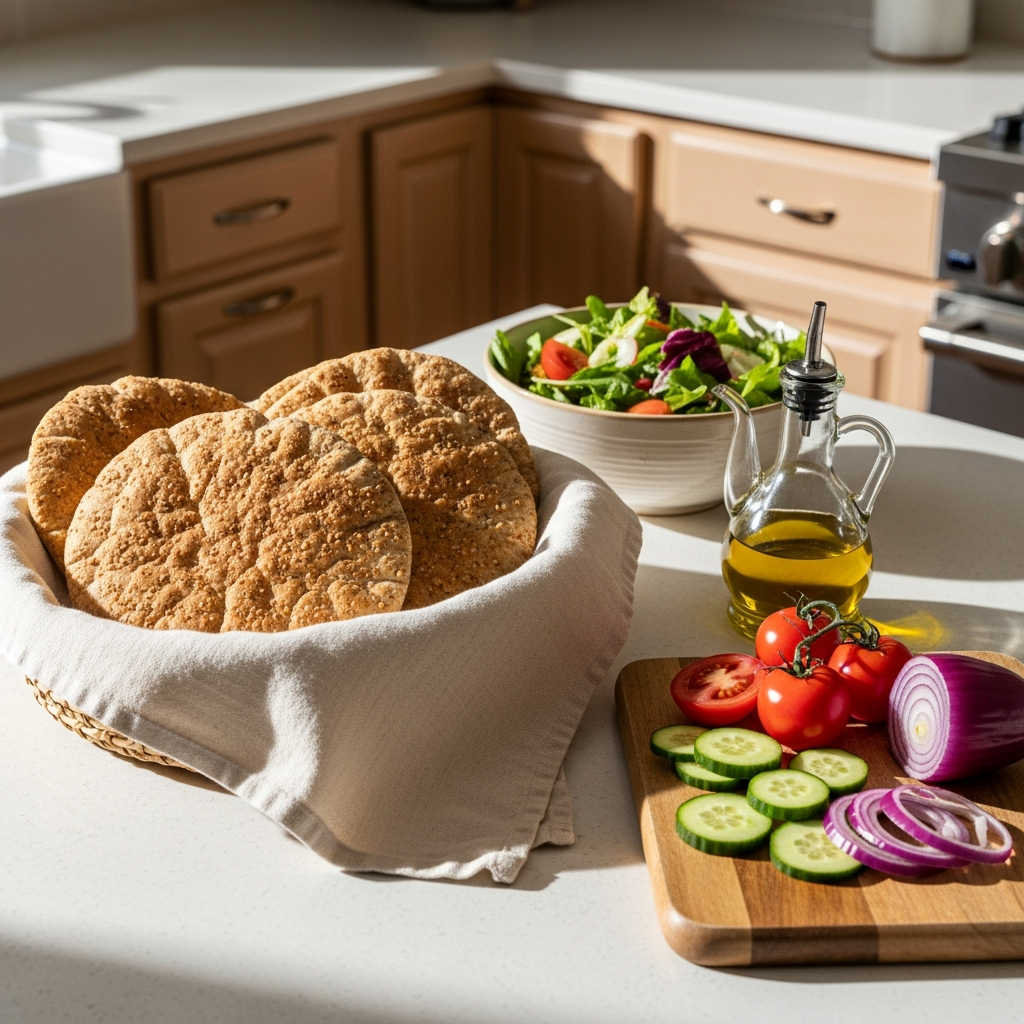
Whole wheat pita bread is one of those simple upgrades that can quietly transform everyday meals in Naperville. It keeps the spirit of our favorite flatbread—soft, warm, and irresistibly scoopable—while adding a nutty depth and a boost of fiber that suits active families and busy professionals alike. Picture this: you come home from a jog along the DuPage River or a bike ride through Springbrook Prairie, and within minutes your kitchen smells like a neighborhood bakery. The rounds you pull from the oven are sturdy enough to hold hearty fillings yet tender enough to fold around crisp vegetables, grilled meats, or a quick spread. If your household loves the bold, aromatic profiles that make Mediterranean food so satisfying, you will appreciate how whole wheat pitas align with those flavors. To spark ideas as you plan your weeknight dinners and weekend gatherings, you can even let the combinations you see on a vibrant menu help you pair sauces and sides with your homemade bread.
Making whole wheat pita at home is not fussy, and it does not require special equipment. What it does ask from you is attention to hydration and rest, because bran in whole wheat flour benefits from extra time to soak up water. That little bit of patience pays off in softness and reliable puff. You will learn to read the dough based on our local climate, tweaking water amounts slightly depending on whether you are baking in a humid July or a crisp February. Once you get the feel for it, the process becomes deeply intuitive—a comforting ritual that anchors family meals and invites friends to linger at the table.
Why whole wheat works so well in pita
Pita is a natural partner for whole wheat flour because the bread’s thin profile and quick bake prevent it from becoming heavy. The gentle nuttiness of whole grains amplifies savory fillings, and the extra fiber brings staying power to meals. In Naperville, where weekends often mean soccer matches, music lessons, or a walk downtown followed by an easy dinner, that staying power counts. The goal is a dough that feels supple, not dense. Think of hydration as a tool: water softens the bran, and time lets the flour fully absorb it, which supports a tender crumb and a satisfying pocket.
Flour choices and where to find them locally
You will find finely milled whole wheat flour in all our major grocers—from Mariano’s to Jewel-Osco—and some bakers enjoy blending white whole wheat flour for a lighter color and milder taste. A portion of bread flour or all-purpose flour helps with elasticity, especially if you are going 100 percent whole wheat for a more pronounced grain flavor. Naperville’s tap water is perfectly fine for the dough, though filtered water works if that is your household preference. Yeast, salt, olive oil, and perhaps a dab of honey round out the ingredient list you likely already have in your pantry.
Hydration, autolyse, and patience
Because whole wheat includes bran and germ, it requires a little more water than all-purpose flour to achieve the same softness. After you mix the ingredients into a shaggy mass, give the dough a generous rest—twenty to thirty minutes works well—before kneading. This step, often called autolyse, allows flour to hydrate and reduces the effort needed to create a smooth, extensible dough. In practical terms, that means better puff and fewer tears when you roll the rounds. On cold, dry Naperville days, consider a tablespoon or two extra water; on humid days, you may need less. Trust your fingertips: the dough should feel alive and elastic, not stiff.
Kneading and the first rise
Knead until the surface is smooth and the dough springs back lightly when pressed. Over-kneading can toughen the texture, while under-kneading risks a weak structure that does not trap steam for a pocket. Aim for balance. Then let it rise somewhere draft-free. In winter, the oven with just the light on makes a gentle proofing box, while in summer the countertop is usually warm enough. You are looking for volume increase and a relaxed feel rather than a specific clock time. The dough should look buoyant and easy to shape.
Dividing, shaping, and rolling for a pocket
Divide the dough into even pieces and shape each into a tight ball by tucking edges underneath. Rest them briefly so the gluten relaxes; this prevents spring-back as you roll. Aim for circles that are uniform in thickness, about as thick as two stacked credit cards. That consistency is what steers steam into the center and creates a pocket. Use only a light dusting of flour so the surface stays smooth. Ragged edges tend to split in the oven, which lets steam escape before the pocket forms.
Oven setup and baking
Preheat a baking stone, steel, or an inverted heavy sheet pan for at least thirty minutes at your oven’s highest setting. Load quickly and close the door to keep the blast of heat contained. Whole wheat pitas often puff just as dramatically as white pitas when these conditions are met. If you see a strong dome begin to build, resist opening the door to check; let the heat do its work. Pull the rounds when they have a light bronze tint and a few deeper freckles. Stack and wrap them in a clean towel to capture steam and maintain softness.
Flavor companions for whole wheat’s nuttiness
Whole wheat loves bold, bright, and creamy partners. Think tangy lemon, garlicky yogurt, tahini, pickles, herbs, and grilled vegetables. In colder weather, slow-cooked meats and spiced legumes feel right at home. If you want creative direction for a dinner party, look to the variety and balance you might find on a thoughtfully curated menu, then choose two or three complementary elements to keep things lively without crowding the plate.
Meal prep for busy Naperville weeks
Whole wheat pitas are meal-prep champions. Bake a double batch on Sunday, freeze half with parchment between rounds, and reheat as needed. They become weekday wraps, quick breakfast sandwiches with eggs and greens, and after-practice snacks that actually satisfy hungry teens. If you are juggling commutes, gym time, and community events, having a stack of pitas on standby is the difference between defaulting to something forgettable and enjoying a dinner that feels intentional and nourishing.
Nutrition perspective without losing the joy
Whole wheat brings fiber, B vitamins, minerals, and a slower digesting starch profile that helps meals feel balanced. But numbers aside, the real triumph is how delicious it is when handled right. You are not giving up the tender fold or the playful pocket; you are simply inviting more flavor and staying power to the party. That is a win for anyone who wants to eat well in a way that still feels celebratory.
Variations and subtle enhancements
Stir a bit of sesame into the dough for extra aroma, or finish warm pitas with a brush of olive oil and a sprinkle of za’atar. Add a pinch of smoked paprika for a whisper of campfire coziness during winter months. Keep embellishments light so you do not interfere with puff. If you want a sweeter note for breakfast pitas, a drizzle of honey in the dough offers a gentle warmth without tipping into dessert territory.
Serving ideas rooted in our town’s gatherings
From graduation celebrations to backyard barbecues along 87th Street, whole wheat pitas slide into the menu without fuss. Lay out sliced vegetables, a bright salad, and a protein or two, and let guests assemble wraps. Because the bread is sturdy and flavorful, even a simple combination—like roasted peppers, chickpeas, and a lemony yogurt—feels complete. In colder seasons, set a pot of lentil soup on the stove, warm a stack of pitas, and call it dinner. The meal feels wholesome, local, and easy to share.
Frequently asked questions
How do I keep whole wheat pitas soft?
Hydration and rest are your friends. Allow a generous autolyse so the bran hydrates, and after baking, stack the pitas and wrap them in a clean towel to trap residual steam. Reheat briefly on a skillet or in a hot oven to restore suppleness on day two.
Can I make 100 percent whole wheat pitas?
Yes. Expect to add a little more water, extend resting times, and roll carefully for uniform thickness. Using extra-fine whole wheat flour helps. If the dough feels tight, let it relax longer before rolling; patience leads to softer bread and better puff.
Why didn’t my whole wheat pitas puff like white ones?
They often do, but whole wheat’s bran can interfere if the dough is under-hydrated or rolled unevenly. Increase water slightly, extend the rest before kneading, and ensure even thickness. A thorough preheat of your baking surface is also essential.
What fillings pair best with whole wheat’s flavor?
Bold, bright, and creamy elements shine: roasted vegetables, grilled chicken, lemony dressings, tangy pickles, tahini, feta, and fresh herbs. For menu planning, scan a varied menu to spark combinations that balance richness, crunch, and acidity.
Can I freeze whole wheat pitas?
Absolutely. Cool completely, separate with parchment, and freeze in a bag. Reheat in a hot oven wrapped in foil or on a dry skillet. The texture rebounds beautifully, making them perfect for meal prep.
Is white whole wheat flour different from regular whole wheat?
Yes. White whole wheat is milled from a lighter-colored wheat variety and tastes milder while still delivering whole-grain nutrition. It is a great choice if you are introducing kids to whole wheat pitas for the first time.
Do I need special equipment?
No. A baking stone or steel helps, but an inverted heavy baking sheet preheated thoroughly will produce pitas with reliable puff. A simple rolling pin, a hot oven, and a bit of practice are enough.
When you are ready to bring warmth, nutrition, and that unmistakable fresh-bread aroma into your home, whole wheat pitas are a friendly place to start. They reward everyday effort with extraordinary versatility, and they make healthy eating feel like something to savor. If you want a little flavor inspiration for your next dinner party or family night, let your spread take cues from a balanced, crowd-pleasing menu as you serve these nourishing rounds. Naperville tables love food that is both wholesome and inviting, and this bread delivers just that.