There is a special comfort in making Taboili at home in Naperville, where the rhythm of neighborhood life seems to encourage dishes that are fresh, shareable, and easy to love. The salad speaks a language of herbs and citrus, and once you learn its cadence you can assemble it almost on instinct. On a quiet evening after a walk, or on a weekend when friends drift in and out of the kitchen, this is the kind of recipe that invites conversation as much as it invites appetite. It is simple but not simplistic, and it rewards attention to small details—how you chop, when you salt, how long you let it rest—more than any elaborate technique.
I like to start Taboili with a clear counter and a deep bowl, because the salad is about abundance and movement. You will need to rinse parsley thoroughly and then dry it well, since water is the enemy of crisp greens. As you lay the herbs out on a towel, put on a kettle for tea or take a breath and look out the window; that pause helps you move at a pace that suits the salad’s nature. Before you chop a single leaf, squeeze a lemon and taste its juice. If it tastes like sunlight, you are already on your way. Sometimes I think of the process the way you might peruse a Mediterranean restaurant’s menu to pick a meal: you are seeking balance, company, and a sense of ease.
Preparing the Parsley
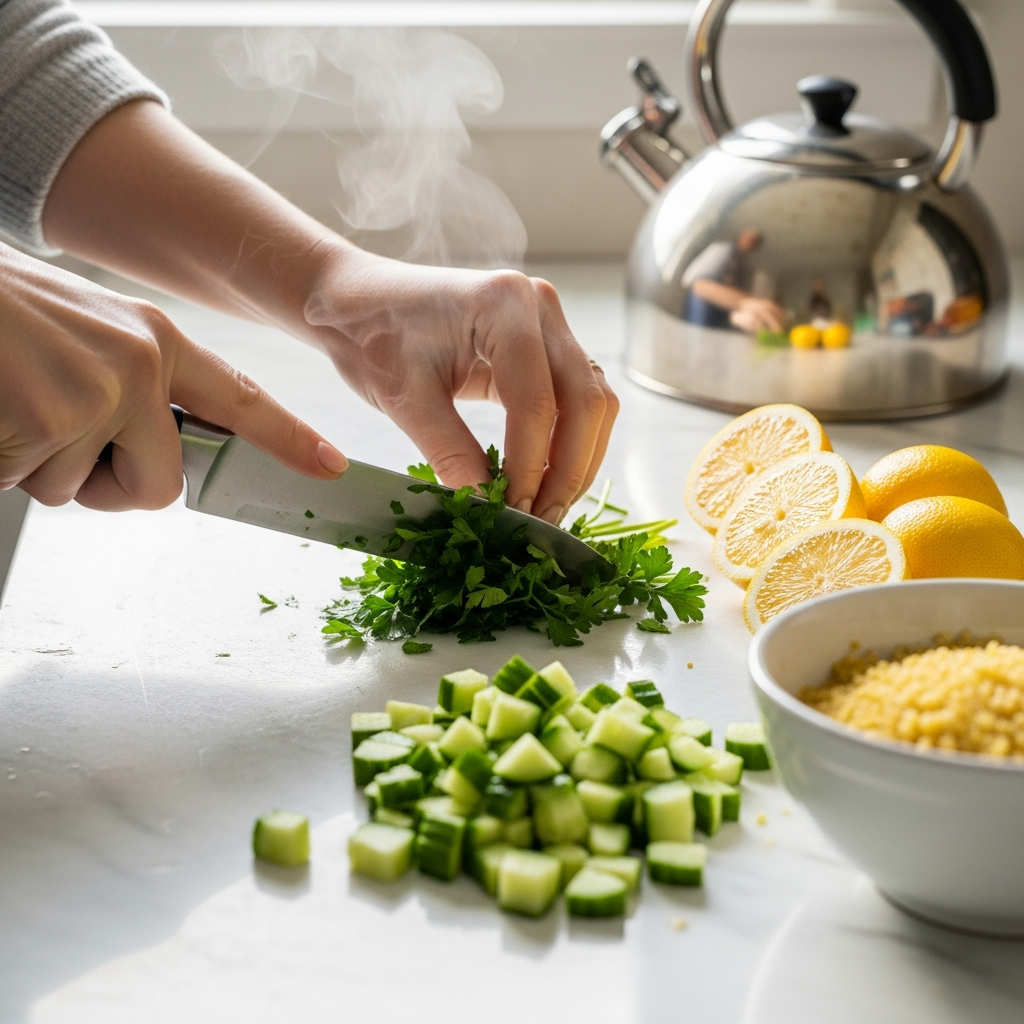
Once dry, gather parsley into small piles and begin chopping with a sharp knife, rocking the blade and pulling the pieces together repeatedly until everything is fine, even, and aromatic. This is a moment to enjoy. The scent that rises is both grassy and sweet, and it fills the kitchen with a promise of freshness. Some people prefer flat-leaf exclusively, others blend in a little curly for texture; what matters is uniformity and tenderness. When a pinch of chopped parsley feels soft between your fingers, you are on track.
Hydrating the Bulgur
Bulgur should be a quiet, supportive presence. Fine or medium grain softens quickly with lemon juice and a splash of water, and I like to let it sit while I chop the vegetables. You are aiming for a texture that resists slightly, then yields. If it drinks too much and puffs up, the salad gets sleepy. If it stays too firm, the grains may feel separate rather than integrated. Taste a few granules; they should be soft at the edges with a tender center.
Dicing Tomatoes and Cucumbers
Tomatoes should be small and neat, their juices captured to moisten the bulgur rather than to pool in the bowl. In summer, I reach for sweet cherry tomatoes; in cooler months, I pick plum tomatoes for consistency. Cucumbers provide crunch, so choose Persian or English varieties with small seeds. If the seeds are watery, scoop them out, then cut the flesh into tiny cubes. As you work, think about the architecture of each bite: tiny, even pieces that meet your fork together, so every mouthful tastes complete.
Scallions and Mint
Scallions bring a mild onion perfume; mint adds lift. Slice scallions thinly and chiffonade a few mint leaves until they resemble little ribbons. You are not trying to announce mint; you are inviting it to echo the parsley’s brightness. When you inhale, you should sense coolness, not candy. If your mint is very assertive, err on the side of less.
Dressing With Intention
In a small bowl, whisk lemon juice with extra virgin olive oil and a pinch of salt. Taste that mixture. It should make your mouth water and your shoulders relax. Then pour it, not all at once, over the chopped ingredients, tossing gently and pausing to reassess. Add more as needed. This is the moment where the salad becomes itself. If it looks glossy and smells bright without any puddling at the bottom, you have nailed it.
Seasoning and Resting
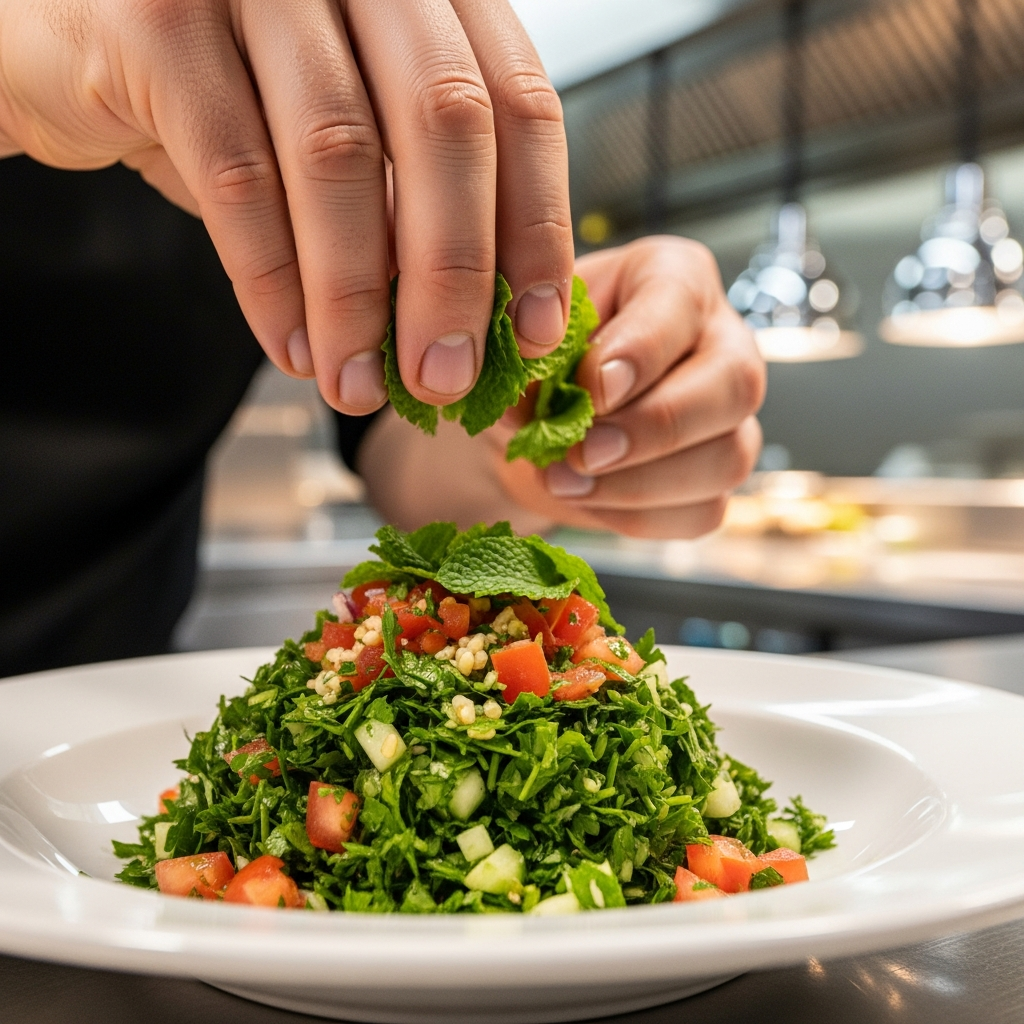
Salt the elements in steps—parsley first, then the tomatoes, then a final check after dressing—so you have control. A whisper of black pepper can add dimension if you like. Then, let the bowl rest in the fridge for twenty to thirty minutes. The pause allows the bulgur to finish softening and the flavors to marry. When you return, taste again and tune lemon, oil, or salt by the smallest degrees. I often add a few more chopped herbs right before serving, as if putting a finishing ribbon on a gift.
Serving at Home in Naperville
At home, Taboili often steals the show from the main course. I like to serve it with warm pita, a smoky eggplant spread, or grilled chicken. On a busy weeknight, it becomes dinner with a little cheese and olives; on weekends, it arrives as the refreshing center of a casual buffet. If I am unsure how to round out the table, I glance at a Mediterranean menu for pairing inspiration, then use what is in the pantry. The salad’s strength is its adaptability; it never clashes, it only brightens.
Make-Ahead Strategy
You can stage the process to match your schedule. Rinse and dry herbs in the morning, then tuck them in the fridge in a loosely sealed container lined with a towel. Dice tomatoes and cucumbers and keep them separate, especially if the tomatoes are very juicy. Hydrate bulgur just before assembly so it does not overshoot tenderness. Right before guests arrive or dinner begins, combine everything, dress lightly, and let it rest. That final window is when magic happens.
Common Mistakes and How to Avoid Them
Wateriness is the usual culprit when a bowl disappoints. Fight it by drying herbs thoroughly and controlling tomato juice. If the salad still feels flat, it likely needs a touch more acid rather than more salt. Conversely, if it tastes sharp, a breath of olive oil and a gentle pinch of salt can knit it together. Another pitfall is over-bulgurizing the bowl; remember, parsley is the lead actor. If the green fades into the background, add more chopped herbs to restore the balance.
FAQ: Can I make Taboili the day before?
You can prep components a day ahead and assemble closer to serving. Fully mixed Taboili tastes good the next day but the herbs will soften. If you want sparkle, keep the parts separate and combine a couple of hours before eating.
FAQ: How fine is fine when chopping parsley?
Think confetti. Tiny, uniform pieces that feel almost feathery. If the parsley looks like small leaves instead of small pieces, keep chopping. The finer the cut, the more perfume in every bite.
FAQ: What if I do not have bulgur?
Use cooked, cooled quinoa in a small amount or even a grated cauliflower crumble for a grain-free route. The key principle holds: the herbs must lead and the grain should support quietly.
FAQ: How do I rescue an over-salted salad?
Add more chopped parsley and tomatoes to rebalance, then a squeeze of lemon to lift the flavors. The goal is not to hide the salt but to broaden the salad until the seasoning lands gently.
If you have been waiting for a sign to make Taboili tonight, consider this it. Gather your herbs, breathe in their freshness, and give yourself to the small, satisfying work of chopping and tasting. When you are considering what else to serve, a quick glance at a Mediterranean menu can offer simple pairing ideas. Start where you are, use what looks best in Naperville today, and let the salad teach you its rhythm. Before long, you will be making it by feel, the way all the best home recipes are learned.