Cooking gluten-free in Naperville doesn’t mean giving up the dishes you love; it means learning the small adjustments that protect texture and flavor while keeping everyone at the table happy. Falafel is one of those dishes that adapts beautifully, especially when you start from the authentic baseline of soaked, dried chickpeas. I’ve been testing gluten-free versions for years in my south Naperville kitchen, and along the way I learned to tune your ingredients like you’d tune a backyard grill—small tweaks, big payoffs. When I need a spark for pairings or sauce variations, I’ll skim a local spot’s menu for cues, then return to the stovetop with confidence, knowing I can keep the recipe naturally gluten-free without sacrificing the crisp edges and tender centers we crave.
The great news is that the foundation of falafel is already gluten-free when you start with dried chickpeas and fresh herbs. The usual gluten traps are fillers, binders, or breadcrumbs added to stabilize an overly wet mixture. If you soak the chickpeas properly, grind them to a coarse consistency, and rest the mixture before frying, you won’t need wheat-based help. For structure, I keep a small bag of chickpea flour on hand, but I use it sparingly—just enough to absorb excess moisture on humid days or when onions run particularly juicy. The result is unmistakably falafel: crisp, aromatic, and light.
Ingredients and pantry setup
You’ll want dried chickpeas, flat-leaf parsley, cilantro, onion, garlic, cumin, coriander, salt, black pepper, and baking powder. For a gluten-free binder, use chickpea flour or a finely milled gluten-free all-purpose blend with no added gums when possible. Neutral oil for shallow frying completes the list. Naperville’s grocery stores carry everything you need, and you can even buy herbs by the bunch at neighborhood stands in season. If you maintain a gluten-free kitchen, double-check labels on spices and baking powder; while they’re typically GF, it’s smart to confirm.
For sauces and sides, tahini is naturally gluten-free, as are cucumbers, tomatoes, pickles, and most olives. Pita is the one common accompaniment you’ll need to source thoughtfully. Gluten-free pitas and flatbreads have improved dramatically in recent years, and a gentle warm-up in a dry skillet or oven can return suppleness. Alternatively, serve falafel bowls with rice or quinoa, or cucumber “boats” filled with chopped vegetables and drizzled with tahini.
Mastering the gluten-free texture
Texture is everything. Rinse and soak the chickpeas for 12–24 hours, then drain and pat them dry. In a food processor, pulse chickpeas with onion, garlic, parsley, and cilantro until the mixture is coarse and sandy, not creamy. It should press together when squeezed without leaking liquid. If it’s sticky-wet, sprinkle in a teaspoon or two of chickpea flour and pulse briefly to distribute. Stir in ground cumin, ground coriander, salt, pepper, and a pinch of baking powder by hand. Rest the mixture for 20 minutes; this step allows the flavors to bloom and the starches to tighten slightly, which is particularly helpful in a gluten-free context where elasticity must come from careful processing rather than gluten.
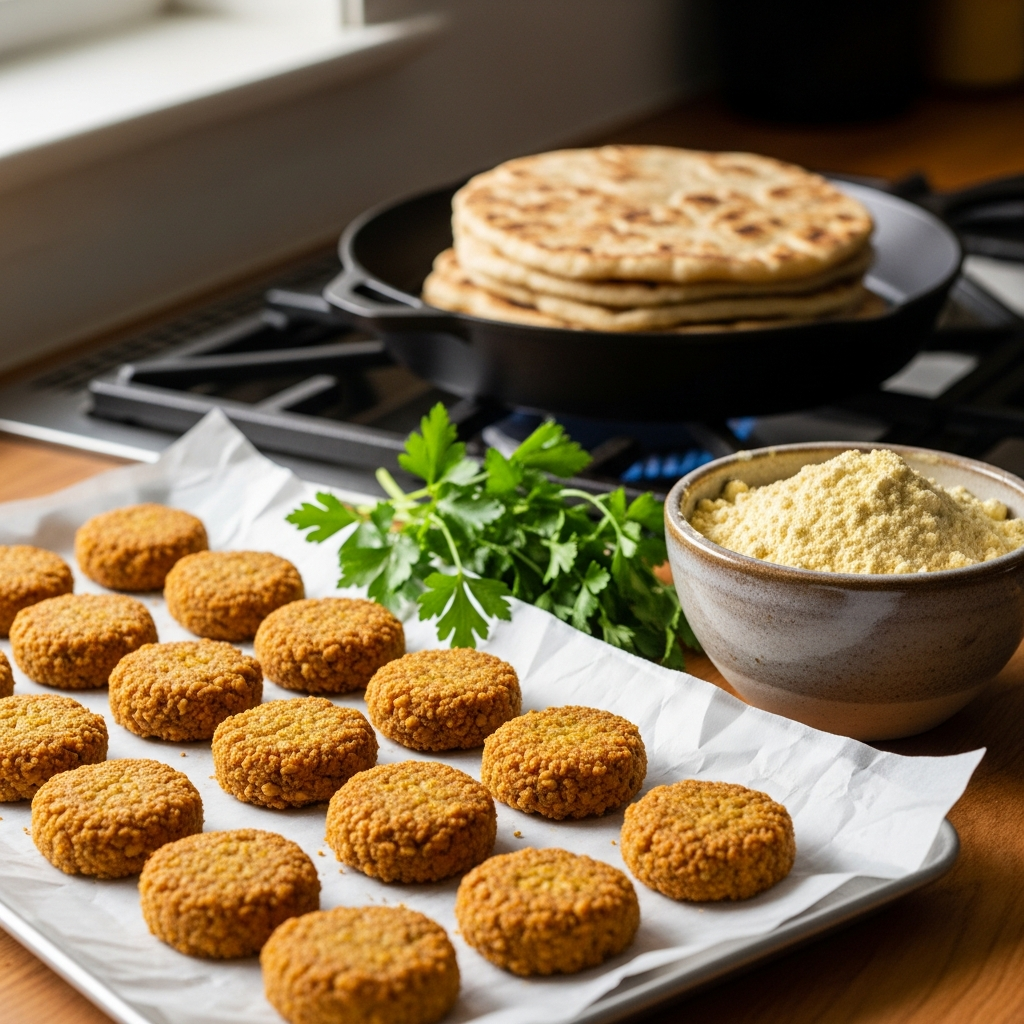
When forming patties, dampen your hands so the mixture doesn’t cling. Aim for slightly thicker centers to encourage even cooking. Heat a neutral oil over medium heat in a heavy skillet, and slide in the patties without crowding. You’re after a gentle, insistent sizzle—enough activity to brown the surface while the interior sets. Flip once the edges are deeply golden. Drain briefly on a tray lined with parchment, not paper towels; you want air to circulate so the crust stays crisp.
Serving ideas around town
Naperville families eat falafel in a dozen different ways. On school nights, bowls reign: warm rice or quinoa, a few patties, cucumbers and tomatoes, a scatter of herbs, and a lemon-tahini drizzle. On weekends, especially after a bike ride along the Riverwalk, we’ll assemble sandwiches with gluten-free pita warmed until pliable and stuffed with lettuce, pickles, and falafel. If I’m wondering how to riff on sides or sauces without getting lost in options, I glance at a neighborhood favorite’s menu and borrow a pairing—maybe a smoky eggplant spread in summer or a bright, garlicky yogurt in winter.
For parties, I like mini falafel with a trio of sauces: classic tahini, a green herb sauce heavy with parsley and lemon, and a chili-spiked yogurt. Keep the sauces gluten-free by checking labels on yogurt and tahini and by whisking in fresh lemon, garlic, and herbs at home. Set everything out on the kitchen island and let guests build their own plates; the make-your-own approach keeps gluten-free needs visible and easy to honor.
Cross-contact and kitchen flow
In mixed-diet households, cross-contact is the quiet saboteur. Give gluten-free falafel its own cutting board and utensils, and use a clean skillet with fresh oil if you’ve recently fried breaded items. Keep gluten-free pitas in their original package or a sealed bag, and warm them on a dedicated pan or foil to avoid crumbs. Labeling sauces and sides is helpful at gatherings, and it prevents the accidental dip of a gluten-bearing pita into the tahini.
Meal prep helps too. Shape a double batch of patties and refrigerate them on a sheet pan. They firm as they rest and fry neatly when you’re ready. Leftovers reheat in a toaster oven, regaining crunch without drying out. If you freeze cooked patties, cool them completely first, then reheat directly from frozen in a hot oven so they stay crisp.
Flavor balance without wheat
Gluten-free cooking sometimes carries a reputation for blandness, but falafel defies it. Because the base is naturally wheat-free, you can season with the same confidence as any traditional version. Let cumin and coriander set the tone, bringing warmth and citrusy depth. Salt with intention and finish hot falafel with a pinch more. A squeeze of lemon at the table threads everything together. If you crave heat, add a touch of cayenne or a minced fresh chili to the mixture. To lean greener, increase parsley and cilantro for brightness that sings through every bite.
Hosting in Naperville style
We like to gather in this city, whether for a backyard cookout near White Eagle or a quiet dinner after a day at the library downtown. Falafel suits both moods. Set the scene with a platter piled high, bowls of crunchy vegetables, and a carafe of lemon water. Let the kids assemble their own sandwiches; adults can build bowls and linger. The gluten-free adaptations are practically invisible when you start from dried chickpeas and pay attention to moisture. The result tastes like hospitality: crisp, fragrant, and generous.
FAQs
Is falafel naturally gluten-free?
Yes, when made from soaked dried chickpeas, fresh herbs, onion, garlic, and spices. Issues arise only when wheat-based fillers or breadcrumbs are added. Use chickpea flour sparingly for moisture control if needed.
Can I bake gluten-free falafel?
Absolutely. Brush patties with oil and bake on a preheated sheet pan at 425°F, flipping once. The texture is a bit less crisp than shallow-fried falafel but still excellent, and baking is convenient for meal prep.
How do I keep patties from falling apart?
Ensure the mixture is coarse and cohesive, not wet. Add a teaspoon of chickpea flour if needed, rest the mixture, and shape with damp hands. Fry in moderately hot oil to set the crust quickly.
What gluten-free breads work best?
Look for pliable gluten-free pitas or flatbreads and warm them gently to restore flexibility. Alternatively, serve bowls over rice or quinoa, or use lettuce wraps for a fresh, crunchy option.
How should I reheat leftovers?
Use a toaster oven or hot skillet to bring back the crust. Avoid microwaving, which softens the exterior. If frozen, reheat directly from frozen in a hot oven until sizzling.
Are store-bought spice blends safe?
Most single spices are naturally gluten-free, but always check labels for additives. When in doubt, grind your own cumin and coriander for maximum aroma and peace of mind.
If you’re ready to make gluten-free falafel part of your regular rotation in Naperville, soak your chickpeas tonight, pick up fresh herbs tomorrow, and plan a simple spread for the weekend. And if you want a quick nudge on how to plate it—what sides to pair, how to season a sauce—browse a neighborhood favorite’s menu, then heat your skillet and let the scent of cumin and parsley pull everyone to the table.