Mediterranean vs Middle Eastern Food in Naperville: What’s Actually Different?
Most people treat “Mediterranean” and “Middle Eastern” as interchangeable menu labels, but the two culinary traditions have genuinely distinct roots, ingredients, and flavor profiles. If you’ve ever stood outside a Naperville restaurant trying to decide between the two, you’re not alone. The Chicago suburb’s dining scene has grown quickly over the past decade, and the overlap between these cuisines on local menus can make the choice feel more confusing than it needs to be. This guide sorts out what each tradition actually offers, where they overlap, and how to pick the right meal for what you’re craving tonight.
What Is Mediterranean Cuisine?
Mediterranean cuisine draws from the coastal countries that ring the Mediterranean Sea: Greece, Italy, Spain, southern France, Turkey, and the Levant (Lebanon, Syria, Israel, and Palestine). The unifying thread is a shared pantry rather than a shared culture. Olive oil, fresh vegetables, legumes, grains, and seafood appear across all of these countries, tied together by the region’s warm, dry growing season.
In practical terms, when a Naperville restaurant calls itself “Mediterranean,” expect dishes built around:
- Olive oil as the primary fat, used generously in cooking and as a finishing drizzle
- Fresh herbs like oregano, thyme, rosemary, and flat-leaf parsley
- Grilled proteins, often lamb, chicken, or fish, seasoned simply to let the meat speak
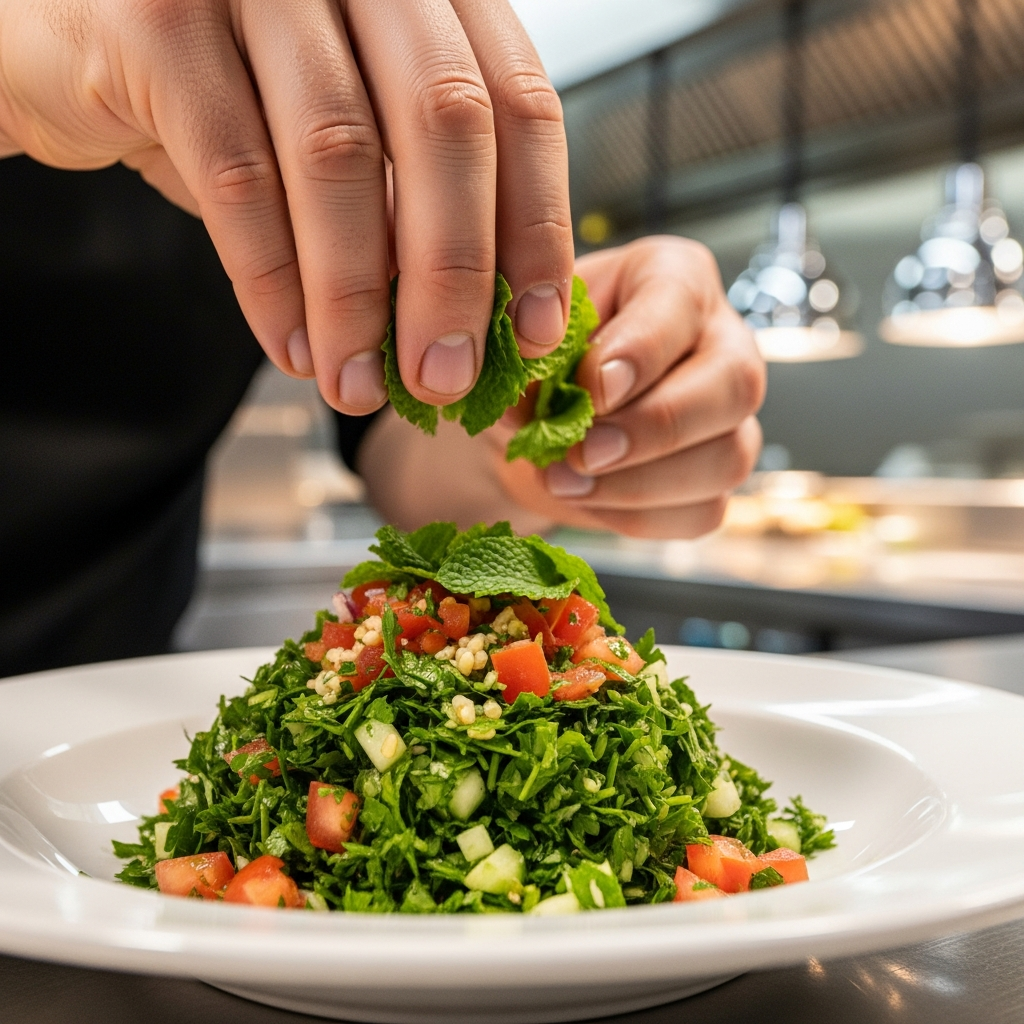
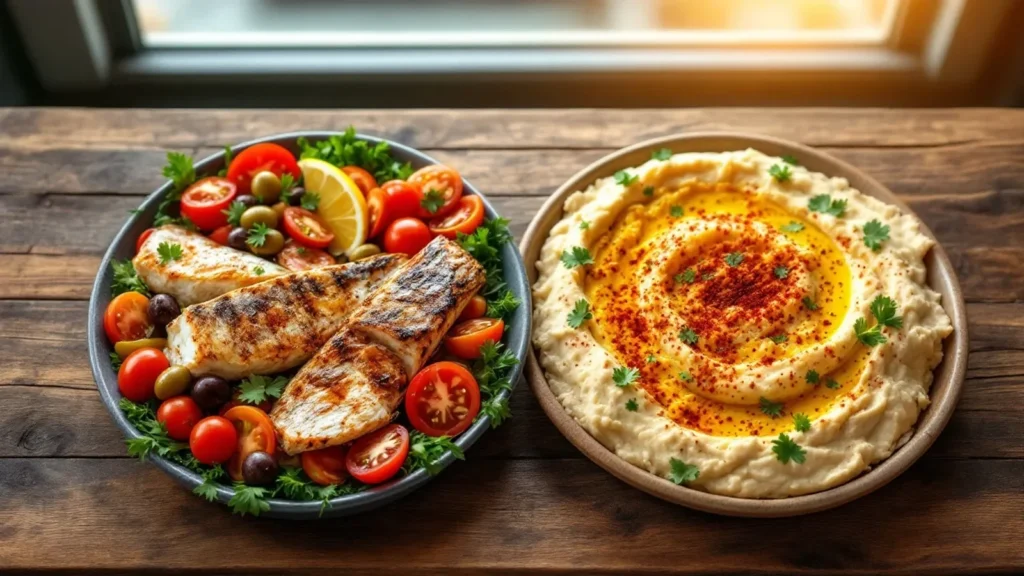
- Mezze-style small plates: hummus, tabbouleh, stuffed grape leaves, baba ganoush
- Flatbreads and pita served alongside rather than as the main event
- Bright, acidic finishes from lemon juice and fresh tomatoes
The flavor profile leans clean and herb-forward. Spice is present but rarely the dominant note. A well-made Mediterranean plate should taste like summer produce coaxed into something satisfying.
For Naperville diners curious about sourcing and food standards, it’s worth noting that Mediterranean menus vary widely in how proteins are sourced. If halal certification matters to you, our guide to spotting a genuinely certified halal kitchen walks through exactly what to look for before you order.
What Is Middle Eastern Cuisine?
Middle Eastern cuisine comes from a geographic area that spans the Arabian Peninsula, the Levant, Iran, Iraq, and parts of North Africa. While there is significant overlap with the eastern Mediterranean (Lebanon and Syria sit in both categories, depending on who’s drawing the map), Middle Eastern cooking as a broader category leans harder into warm spice blends, slow-cooked meats, and rice-based dishes.
Signature characteristics include:
- Complex spice blends: baharat, za’atar, sumac, cumin, coriander, turmeric, and cardamom appear in combinations that build layers of warmth
- Slow-cooked and rotisserie meats, including shawarma, kofta, and kebabs marinated in spiced yogurt
- Rice dishes like mujaddara (lentils and rice) and maqluba (layered rice and vegetables)
- Dairy-forward accompaniments: labneh (strained yogurt), ayran (salted yogurt drink), and fresh cheeses
- Sweeter dessert traditions built on phyllo, semolina, rose water, and orange blossom
- Legumes as a centerpiece, not a side: falafel, ful medames, and lentil soups are meals in themselves
The flavor profile is warmer and more aromatic than its Mediterranean counterpart. A shawarma wrap carries a depth of spice that a Greek souvlaki, while delicious, simply doesn’t aim for. Neither is better; they satisfy different cravings.
Halal certification is far more common in Middle Eastern restaurants because the culinary tradition and Islamic dietary law developed alongside each other across much of the region. If you want the full background on what halal actually means in a food-service context, our halal food explainer for Naperville diners covers the certification process in plain language.
Where the Two Cuisines Overlap in Naperville
The honest answer is: a lot. Hummus, pita, falafel, tabbouleh, and grilled lamb appear on menus labeled both Mediterranean and Middle Eastern across Naperville. That’s not deceptive marketing; it reflects genuine culinary history. The Levantine countries (Lebanon especially) are both Mediterranean by geography and Middle Eastern by cultural classification, so their dishes legitimately belong to both traditions.
In Naperville’s restaurant landscape, the practical difference often comes down to emphasis:
- A Mediterranean-labeled menu tends to include more seafood options, Greek-influenced dishes like spanakopita or moussaka, and Italian-adjacent items
- A Middle Eastern-labeled menu tends to feature more shawarma, kebab varieties, rice dishes, and a broader spice palette
The overlap zone, which includes hummus, pita, falafel, and grilled meats, is where most Naperville diners spend most of their time anyway. If you’re planning to bring a large group and want a spread that covers both traditions without confusion, our guide to halal catering for Naperville events covers how to build a menu that satisfies both preferences at once.
Naperville’s Dining Landscape: Why This Distinction Matters Here
Naperville is one of the most ethnically diverse mid-sized cities in Illinois. The southwest suburbs have seen steady growth in South Asian, Arab American, and East African communities over the past two decades, and that demographic shift has reshaped the local restaurant scene in ways that matter to diners who care about both flavor and food standards.
Unlike downtown Chicago, where Mediterranean and Middle Eastern restaurants are numerous enough that diners can afford to be casual about their choices, Naperville diners often have fewer options within a short drive. That makes it worth understanding what you’re ordering before you arrive. A restaurant marketing itself broadly as “Mediterranean” may or may not carry halal-certified proteins. A restaurant rooted in Levantine or Gulf cuisine is more likely to, but not guaranteed.
The Naperville area also has a significant Muslim community centered around several mosques along the Route 59 and Ogden Avenue corridors. For families and individuals who require halal certification as a non-negotiable, the distinction between a restaurant that uses the word “Mediterranean” loosely and one that is actually certified matters enormously. Knowing which culinary tradition a restaurant is drawing from gives you a better starting guess before you call ahead to confirm.
For the complete picture of where to find certified halal options in the area, the full Naperville halal food guide covers what to ask, what to look for, and which neighborhoods to focus your search on.
Comparison: Mediterranean vs Middle Eastern Food at a Glance
The table below contrasts the two traditions across the criteria that matter most when you’re deciding where to eat in Naperville.
| Criteria | Mediterranean | Middle Eastern |
|---|---|---|
| Core flavor profile | Herb-forward, bright, olive-oil-rich, lightly spiced | Warm, aromatic, spice-layered, often richer |
| Signature proteins | Grilled fish, chicken, lamb souvlaki, seafood | Shawarma, kofta, kebabs, slow-roasted lamb |
| Carbohydrate base | Flatbread, pita, pasta (in Italian-adjacent menus) | Rice dishes, flatbread, bulgur, lentils |
| Shared dishes | Hummus, falafel, tabbouleh, baba ganoush, pita, grilled lamb | |
| Halal certification likelihood | Varies widely; Greek and Italian-leaning menus often non-certified | More commonly certified; confirm before visiting |
| Dessert tradition | Baklava, yogurt-based sweets, fruit-forward | Baklava, kunafa, halwa, rose water pastries |
Which Is Right for Naperville Diners?
The honest verdict: the right choice depends on what you’re actually hungry for, not which label a restaurant wears.
If you want something lighter, with bright citrus notes and grilled fish or vegetable-forward plates, a Mediterranean menu leans that direction. If you want something more aromatic and satisfying, built around spiced rotisserie meat, rice, and a spread of mezze, a Levantine or Gulf-style Middle Eastern kitchen is the better fit.
For Naperville diners who require halal certification, the practical advice is this: don’t assume either label guarantees it. Call ahead, check for posted certification, or look for restaurants that make halal sourcing a visible part of their identity rather than a footnote. A kitchen that is genuinely committed to halal standards will make that easy to verify.
At Habibi Shawarma in Naperville, the menu sits squarely in the Levantine tradition: shawarma, falafel, hummus, fresh pita, and spiced grilled meats, all prepared with halal-certified ingredients. It’s the kind of food that covers both the Mediterranean and Middle Eastern columns in the table above, because that’s where Levantine cooking has always lived.
Frequently Asked Questions
Is Mediterranean food always halal?
No. Mediterranean cuisine spans many countries and religious traditions, including Greek, Italian, and Spanish cooking where pork and non-halal proteins are common. Always confirm halal certification directly with the restaurant rather than assuming based on the menu label.
Is Middle Eastern food always spicy-hot?
Not typically. Middle Eastern cooking uses warm spices like cumin, coriander, and cinnamon for depth and aroma, but chili heat is usually mild and often optional. Most dishes are aromatic rather than fiery, making them approachable for diners who are sensitive to capsaicin.
What is shawarma, and which tradition does it belong to?
Shawarma is a rotisserie-cooked meat dish, typically chicken or lamb, marinated in a spiced yogurt blend and slow-cooked on a vertical spit. It originated in the Levant and Ottoman culinary tradition, placing it firmly in the Middle Eastern category, though you’ll find it on Mediterranean menus as well given the geographic overlap.
Can I find vegetarian and vegan options in both traditions?
Yes. Both Mediterranean and Middle Eastern cuisines have strong vegetarian traditions built on legumes, grains, and vegetables. Falafel, hummus, baba ganoush, tabbouleh, and stuffed grape leaves are naturally plant-based staples that appear across both menus.
How do I know if a Naperville restaurant is genuinely halal-certified?
Look for a posted certification from a recognized halal authority, ask staff directly about their protein sourcing and certification body, and check whether the restaurant proactively lists halal status on its menu or website. Our guide to identifying authentic halal restaurants in Naperville covers the specific questions to ask.
Does pita bread differ between Mediterranean and Middle Eastern restaurants?
The bread itself is similar across both traditions, but how it’s served differs. Mediterranean menus often use pita as an accompaniment to dips or for wrapping grilled proteins. Middle Eastern menus may feature thicker flatbreads, saj-cooked wraps, or open-faced preparations depending on the regional sub-tradition. For tips on keeping pita fresh at home after a takeout order, our pita storage guide has practical advice.
The Bottom Line
Mediterranean and Middle Eastern food in Naperville share a lot of common ground, but they’re not the same thing, and the differences matter when you know what you’re in the mood for. Mediterranean cooking tends toward lighter, herb-driven plates with a broader geographic range. Middle Eastern cooking, especially in the Levantine and Gulf traditions, goes deeper into spice, slow-cooked meats, and rice-based dishes that fill you up differently.
For Naperville diners who want the full picture on finding certified halal options in the area, the complete guide to halal food in Naperville is the right next stop. And if you’re ready to sit down to shawarma, falafel, and fresh hummus made with halal-certified ingredients, Habibi Shawarma is on Washington Street in Naperville, ready when you are.