How to Store Pita Bread and Keep It Fresh at Home in Naperville
Pita bread left on the counter overnight turns into a dry, brittle disc by morning. What started as a soft, pillowy pocket becomes something closer to a cracker, and no amount of reheating fully brings it back. For Naperville households that regularly enjoy Mediterranean meals, knowing how to store pita bread properly is the difference between a satisfying meal the next day and a disappointing one. Whether you picked up a stack from a local restaurant or bought a package from a grocery store, a few simple habits will keep every piece tasting close to fresh-baked.
Before You Start: What You’ll Need
- Resealable zip-top bags (quart or gallon size)
- Plastic wrap or reusable food wrap
- Aluminum foil
- An airtight container or bread box (optional but helpful)
- A clean kitchen towel (for short-term counter storage)
- Access to a freezer (for longer storage)
- A skillet, oven, or toaster oven for reheating
No special equipment is required. The tools above are almost certainly already in your kitchen, and the method you choose will depend mostly on how soon you plan to eat the bread.
Step 1: Let the Pita Cool Completely Before Storing
If your pita is warm, whether it just came out of an oven, off a grill, or was freshly wrapped from a restaurant, resist the urge to seal it immediately. Trapping steam inside a bag or container creates condensation, and that moisture accelerates mold growth and turns the bread gummy rather than soft. Lay the pieces flat on a clean surface or a wire rack and give them at least 15 to 20 minutes to reach room temperature. This single step prevents the most common storage mistake and extends the bread’s usable life noticeably.
Step 2: Choose the Right Storage Method for Your Timeline
How you store pita bread should match how quickly you plan to eat it. There are three realistic windows to plan around:
- Same day (up to 8 hours): A clean kitchen towel or a bread box at room temperature works fine. The cloth allows a tiny amount of airflow, which keeps the crust from getting soggy while preventing the interior from drying out too fast.
- 1 to 3 days: A sealed zip-top bag at room temperature is your best option. Press out as much air as possible before sealing. Store the bag away from direct sunlight and heat sources like the stove or a sunny windowsill.
- 4 to 7 days: Move the sealed bag to the refrigerator. Cold temperatures slow staling and mold, though refrigeration does cause pita to firm up slightly. A quick warm-up before eating restores most of the softness.
Matching storage to your actual meal plan avoids the cycle of bread going stale before you get to it.
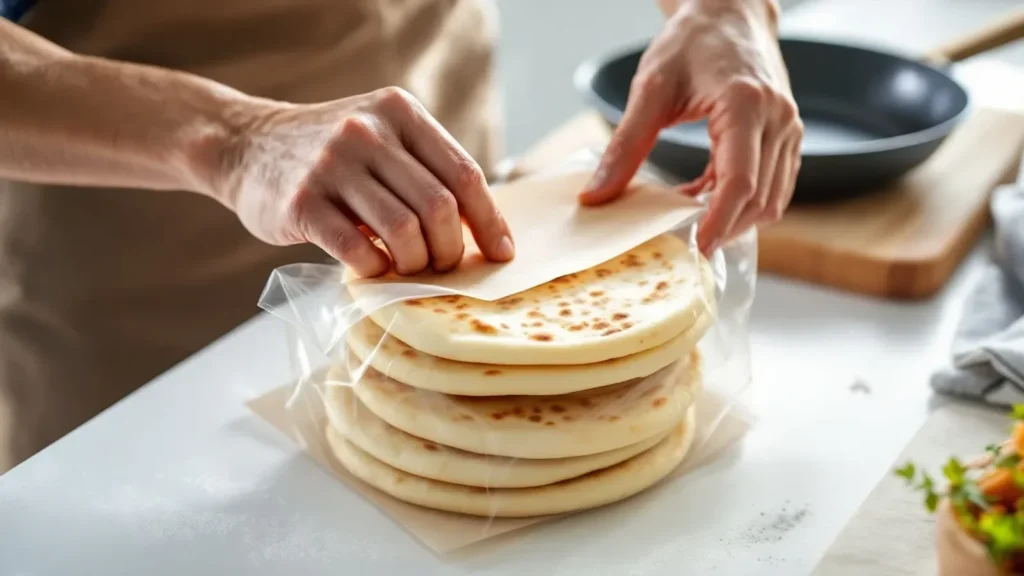
Step 3: Stack and Separate Pitas Before Sealing
Pita rounds have a tendency to fuse together when stored in a stack, especially if they are still slightly warm or were made with a bit of oil on the surface. Before sealing your bag or container, place a small square of parchment paper or plastic wrap between each piece. This takes about 30 extra seconds and makes a real difference when you want to pull out a single piece without tearing the others. For restaurant-style pita that arrives in a foil wrap, transfer the pieces to a proper storage bag rather than leaving them in the foil, which is not airtight and allows moisture to escape quickly.
Step 4: Freeze Pita Bread for Longer Storage
Freezing is genuinely the best long-term option for pita bread, and it works far better than most people expect. Properly frozen pita keeps its quality for up to three months. Here is how to do it correctly:
- Separate each piece with parchment paper as described in Step 3.
- Place the stack in a freezer-safe zip-top bag and press out all the air before sealing.
- For an extra layer of protection against freezer burn, wrap the entire bag in a single layer of aluminum foil.
- Label the bag with the date so you know when you froze it.
- Lay the bag flat in the freezer rather than folding or crumpling it, which can crack the bread.
The freezer method is especially useful for Naperville families who buy pita in bulk or pick up extra from a Mediterranean restaurant and want to enjoy it over several weeks rather than rushing through a large stack.
Step 5: Thaw Frozen Pita the Right Way
Thawing matters as much as freezing. Pulling pita straight from the freezer and microwaving it on high heat produces an unevenly heated, often rubbery result. Instead, use one of these approaches depending on how much time you have:
- Counter thaw (30 to 45 minutes): Remove the pieces from the freezer bag, place them on a plate, and cover loosely with a clean towel. They will thaw evenly and be ready to eat or reheat with minimal effort.
- Oven thaw and warm (10 minutes): Wrap the frozen pita in foil and place it in an oven set to around 325°F for 8 to 10 minutes. This simultaneously thaws and warms the bread, making it taste almost freshly made.
- Skillet method (5 minutes): Place the frozen pita directly into a dry skillet over medium-low heat, cover with a lid, and flip once. The trapped steam thaws and warms the bread gently without drying it out.
Avoid microwaving pita for more than 20 to 30 seconds at a time, and if you do use a microwave, place a damp paper towel over the bread to introduce a little steam.
Step 6: Reheat Stored Pita to Restore Softness
Even pita that has been stored correctly in the refrigerator for a few days will feel firmer than when it was fresh. Reheating brings it back. The three methods from Step 5 apply here as well, but for refrigerated (not frozen) pita, the times are shorter:
- Skillet: 1 to 2 minutes per side over medium heat, covered. This is the fastest method and produces a slightly toasted exterior with a soft interior.
- Oven: Wrap in foil, heat at 325°F for 5 to 6 minutes. Good for warming multiple pieces at once.
- Toaster: Works well if you want a crispier result, ideal for using pita as a base for toppings or dipping chips.
If you are pairing your stored pita with fresh dips, grilled meats, or a full Mediterranean spread, warming it first makes a noticeable difference in how well it holds up to sauces and fillings. For the best experience, consider pairing freshly reheated pita with dishes from a reliable local source. The halal food Naperville guide covers where to find the freshest options nearby so you always have something worth bringing home.
Step 7: Recognize When Pita Has Gone Bad
Even with good storage habits, pita bread does not last forever. Knowing when to discard it prevents a disappointing meal or, more importantly, a food safety issue. Look for these signs:
- Visible mold: Any fuzzy spots, regardless of color, mean the entire piece should be discarded. Mold on bread spreads through the interior even when it is only visible on the surface.
- Sour or off smell: Fresh pita has a mild, slightly yeasty scent. A sour, musty, or otherwise unpleasant odor is a clear signal to toss it.
- Extreme dryness or cracking: Bread that has dried out completely will not recover with reheating. It can still be repurposed as pita chips (see the next section), but it will not work as a wrap or pocket.
- Sliminess: This happens when bread is sealed while still warm or stored in a very humid environment. Slimy texture indicates bacterial growth and the bread should not be eaten.
When in doubt, discard it. Pita bread is inexpensive enough that the risk is never worth it.
Step 8: Repurpose Pita That Has Dried Out
If your pita has gone stale but shows no signs of mold or spoilage, it does not have to go to waste. Dry pita is actually ideal for a few simple preparations:
- Pita chips: Brush lightly with olive oil, sprinkle with a pinch of salt or your preferred seasoning, cut into triangles, and bake at 375°F for 8 to 10 minutes until golden and crisp. These pair well with hummus, baba ganoush, or any dip.
- Fattoush salad base: Tear or cut stale pita into rough pieces, toast or fry them, and use as a crunchy topping for a chopped salad. This is a traditional use in Mediterranean cooking and reduces food waste.
- Breadcrumbs: Pulse completely dried pita in a food processor to create coarse breadcrumbs for coating or topping baked dishes.
These uses are common in Mediterranean households and reflect a practical approach to minimizing waste while still getting full value from the bread. If you are curious about the broader culinary traditions behind these dishes, this comparison of Mediterranean and Middle Eastern food explains the regional differences in a way that makes the cooking context much clearer.
When to Call a Professional in Naperville (or Just Order Fresh)
There is an honest limit to what storage can do. If you find yourself repeatedly dealing with pita that goes stale before you finish it, the simplest solution is to buy smaller quantities more frequently rather than buying in bulk. Naperville has enough options for halal Mediterranean food that a quick pickup is rarely inconvenient.
Homemade pita, while rewarding, requires a very hot oven (ideally a pizza stone or cast iron surface) and some practice to get the pocket to form correctly. If you have not made it before, the first few attempts may not puff properly, which is normal. Restaurant-made pita is baked in deck ovens that reach temperatures most home ovens cannot match, which is part of why it tastes different. For everyday meals, sourcing fresh pita from a quality local restaurant and storing it correctly is more practical than baking your own for most households.
If you are planning a larger gathering and need pita in quantity alongside a full spread of halal dishes, catering halal meals for Naperville events is worth reading before you commit to a plan. Ordering through a restaurant’s catering service often means fresher bread, better portion planning, and less last-minute stress than managing everything yourself.
Frequently Asked Questions
How long does pita bread last at room temperature?
Properly sealed pita bread kept at room temperature stays fresh for about two to three days. After that, it begins to dry out and may develop mold, especially in humid conditions. If your kitchen is warm or humid, moving it to the refrigerator after the first day is a safer approach.
Can you freeze pita bread without it getting tough?
Yes, as long as you freeze it correctly. The key steps are letting it cool completely before freezing, separating pieces with parchment paper, removing as much air as possible from the storage bag, and thawing it gently rather than blasting it in a microwave. Pita frozen and thawed this way retains most of its original texture.
Why does my pita bread get hard in the refrigerator?
Refrigeration causes the starch in bread to crystallize faster than it does at room temperature, a process called retrogradation. This makes the bread feel firmer or slightly stale even when it is not. A brief warm-up in a skillet or oven reverses most of this and restores softness before you eat it.
Is it better to store pita in plastic or a bread box?
For short-term storage of one day or less, a bread box or a cloth towel allows just enough airflow to keep the crust from getting soggy. For anything beyond a day, an airtight plastic bag does a better job of locking in moisture and preventing the bread from drying out. Both approaches work, but the timeline determines which is better.
What is the best way to reheat pita without drying it out?
A covered skillet over medium-low heat is the most reliable method. The lid traps steam from the bread itself, which warms it gently and keeps the interior soft. If you are warming several pieces at once, wrapping them in foil and placing them in a low oven achieves a similar result with less hands-on attention.
Keeping Pita Fresh Is Worth the Small Effort
Good pita bread is not complicated to store, but the details matter. Cooling it completely, choosing the right container, separating pieces before sealing, and reheating thoughtfully are habits that take almost no extra time once they become routine. For Naperville households that eat Mediterranean food regularly, these steps mean less waste and better meals throughout the week.
The best starting point is always fresh bread. When you want pita that is soft, properly baked, and paired with a full halal Mediterranean meal, the complete guide to halal food in Naperville is the resource to bookmark. And if you want to understand more about what makes the food worth preserving in the first place, this introduction to halal food covers the standards and traditions behind it in plain terms.