How to Identify Real Mediterranean Shawarma in Naperville
Most people think that any spiced meat wrapped in a warm flatbread qualifies as an authentic shawarma, but true Mediterranean culinary experts know there is a vast difference between a genuine spit-roasted masterpiece and a quick, griddle-cooked imitation. When dining out in Naperville, realizing this difference changes your entire culinary experience. True shawarma relies on centuries-old preparation methods, precise knife skills, and strict culinary discipline. Knowing what to look for ensures you receive the rich, smoky, and tender meat you expect when seeking authentic Middle Eastern food standards.
If you are exploring the diverse culinary landscape of the western suburbs, understanding these distinctions is the best way to navigate your dining options. To help you find the best local meals, you can consult our beginner’s guide to authentic halal dining in Naperville to locate verified kitchens that honor these time-tested traditions daily.
The Vertical Spit vs. The Flat-Top Griddle
The defining characteristic of authentic shawarma is the way the meat is cooked. The word shawarma itself comes from a Turkish word meaning “to turn,” referring directly to the vertical rotisserie. This method is not just for visual appeal; it is a critical thermodynamic process that cannot be replicated on a standard flat-top griddle or pan.
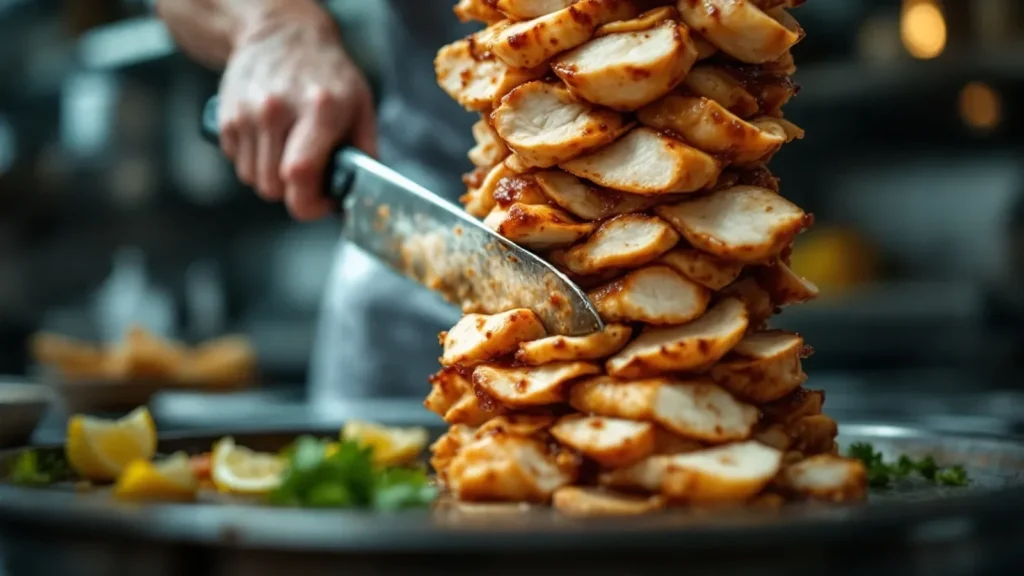
When preparing authentic shawarma, seasoned layers of hand-stacked meat (typically chicken, beef, or lamb) are placed onto a vertical spit. As the spit slowly rotates next to a vertical heating element, the fat melts and cascades down the sides of the meat cone. This natural basting process keeps the interior incredibly succulent while the exterior develops a deeply caramelized, savory crust.
Many fast-casual establishments attempt to cut corners by using pre-cooked, pre-sliced meat that is quickly reheated on a flat-top grill. While this method is faster, it strips away the moisture, leaving the meat dry, rubbery, and uniform in texture. True shawarma must be shaved directly from the vertical spit right before it is served to your plate or wrap, ensuring a perfect contrast of crispy edges and tender bites.
Meat Quality, Marinades, and Hand-Stacking Techniques
Another major indicator of authentic Middle Eastern food standards is the physical structure of the meat on the spit. If you look at the rotating spit and see a smooth, perfectly uniform cylinder that resembles a large sausage, you are likely looking at highly processed, ground meat mixtures rather than whole-muscle cuts.
An authentic kitchen takes the time to hand-stack individual, thinly sliced pieces of premium meat. For chicken shawarma, this involves layering boneless thighs and breasts that have been marinated for hours in a blend of yogurt, lemon juice, garlic, and warm spices like cardamom, cumin, cloves, and cinnamon. For beef or lamb, the marinade often features vinegar, olive oil, and a complex spice profile that tenderizes the fibers.
The marinade must penetrate deep into the fibers, which requires ample time and temperature control. When the spit is carved, you should easily see the individual layered sheets of meat. This physical layering creates tiny pockets that trap juices, ensuring every bite remains moist.
Comparing Shawarma Cooking and Preparation Methods
To help you make the most informed decision when choosing your next meal, let us compare the physical characteristics, cooking mechanics, and sensory profiles of authentic vertical spit-roasting against common shortcut methods.
| Evaluation Criteria | Traditional Vertical Spit-Roasting | Flat-Top Griddle Reheating | Processed Ground Meat Cones | |
|---|---|---|---|---|
| Meat Texture | Contrast of crispy caramelized edges and tender, juicy interior layers. | Uniformly dry, often rubbery or overly greasy from pan oils. | Spongy, soft, and uniform throughout with no distinct meat fibers. | Dry, chewy, and lacking textural variance. |
| Basting Process | Continuous self-basting as melting fat flows down the rotating vertical cone. | Cooked in stagnant pools of added oil or butter on a flat surface. | Artificial fats engineered into the ground mixture melt outward. | No natural self-basting; relies heavily on heavy sauces for moisture. |
| Slicing Method | Shaved thin directly from the live spit using a sharp carving knife. | Pre-cut strips scooped from a warming tray or griddle surface. | Shaved in long, continuous ribbon sheets from a processed mold. | Pre-sliced in bulk and kept warm under heat lamps. |
| Flavor Depth | Complex, slow-roasted smoky notes paired with deeply infused spices. | Surface-level seasoning with a distinct fried or charred oil taste. | Highly salted, processed taste resembling commercial deli meats. | Mild spices masked by sweet or heavy garlic-based sauces. |
The Role of Fresh Bread and Traditional Condiments
Even perfectly roasted meat can be ruined by improper accompaniments. Authentic shawarma is traditionally served with minimal, high-impact toppings designed to highlight, not mask, the flavor of the meat.
For chicken shawarma, the essential condiment is toum, a potent, creamy garlic sauce emulsified with oil, lemon juice, and salt. It should never be substituted with standard mayonnaise or watered-down garlic dressings. For beef shawarma, the classic pairing is tahini, a rich paste made from toasted sesame seeds, combined with fresh parsley, sliced red onions, and a sprinkle of tart sumac.
The choice of bread is equally critical. Authentic wraps utilize thin, pliable flatbreads like saj or fresh pita. The bread should be lightly brushed with the juices from the spit and briefly toasted on the grill to create a warm, slightly crispy exterior. If you have leftover pita bread at home from your takeout meals, you can read our guide on how to store pita bread to preserve that soft, bakery-fresh texture for your next meal.
The Naperville Culinary Landscape: Evaluating Local Standards
Naperville features a highly sophisticated dining community with a strong appreciation for global cuisines. The local housing stock, which includes many modern kitchens and a highly educated, health-conscious population, drives a strong demand for clean, wholesome, and traditionally prepared foods. Diners in the western suburbs actively seek out establishments that preserve authentic culinary processes rather than relying on mass-produced shortcuts.
Furthermore, because many local diners adhere to specific dietary lifestyles, understanding the preparation standards behind what you eat is highly valuable. If you want to dive deeper into the religious and culinary standards that govern these kitchens, check out our guide on what is halal food to learn more about how ingredients are sourced and prepared in the DuPage County area.
Which is Right for Naperville Homes?
When deciding where to spend your dining budget in Naperville, prioritizing authentic vertical spit-roasted shawarma is always the superior choice. While quick griddle-heated options or processed meat cones might save a few minutes of waiting time, they fail to deliver the nutritional value, texture, and complex flavor profiles of traditional preparation.
Authentic shawarma relies on lean, whole-muscle cuts of meat that are naturally basted, making it a much lighter and healthier option for local families looking for a wholesome dinner. By choosing kitchens that invest the labor into hand-stacking and slow-roasting their spits daily, you support true culinary craftsmanship and enjoy a meal that honors centuries of Mediterranean tradition.
Frequently Asked Questions
How can I tell if a restaurant uses a real vertical spit?
The easiest way is to look directly into the kitchen area. An authentic Mediterranean kitchen will have the vertical roasting spits visible behind the counter, actively spinning next to the heating elements with meat being shaved fresh for your order.
What is the difference between Greek gyro and Middle Eastern shawarma?
While both use vertical spits, Greek gyros typically feature a highly seasoned, minced blend of beef and lamb shaved in flat ribbons. Middle Eastern shawarma consists of whole, marinated slices of chicken, beef, or lamb stacked directly on top of each other on the spit.
Is authentic shawarma spicy?
Traditional shawarma is deeply flavorful and aromatic due to spices like cardamom, cumin, and cinnamon, but it is not inherently spicy-hot. Any heat or spice level is typically added afterward through house-made hot sauces or pickled peppers.
Why does some shawarma taste dry?
This usually happens when a kitchen slices the meat off the spit too early and lets it sit in a warming pan, or when they cook the meat on a flat-top griddle instead of using a rotating vertical spit that naturally locks in moisture.
Experience True Mediterranean Craftsmanship
If you are tired of dry, processed meats and want to experience genuine Mediterranean culinary standards, nothing compares to fresh, hand-stacked shawarma shaved straight from the spit. At Habibi Shawarma in Naperville, we honor these traditional methods daily to serve you the tenderest, most flavorful chicken and beef plates in the region. Stop by our Naperville location today to taste the difference that authentic preparation makes, or order your favorite wraps online for a fast, delicious meal at home.