Smart eating in Naperville has a familiar rhythm: a stop at the farmers market for herbs, a brisk walk by the Riverwalk to clear your head, and a dinner plate that balances satisfaction with good sense. Taboili salad fits that rhythm beautifully. It’s bright, herb-forward, and incredibly adaptable, so you can steer it toward your calorie goals without sacrificing flavor or the pleasure of a fresh, home-prepared dish. When neighbors ask me about making lighter meals that still feel like dinner, I often point them to this beloved combination of parsley, mint, tomato, lemon, and a modest measure of bulgur. If you enjoy seeing how restaurants pair lighter sides with heartier mains, a quick browse through a thoughtful Mediterranean menu can help you imagine the kind of plate that keeps you full and energized without going overboard.
Understanding calories in Taboili
Calories in Taboili depend primarily on three factors: how much olive oil you use, the ratio of bulgur to parsley, and the density of add-ins like cucumber or green onion. Parsley, mint, tomato, and lemon all bring vibrancy for very few calories. Bulgur contributes complex carbohydrates and a modest calorie bump. Olive oil, though wonderfully heart-healthy, is calorie-dense, so mindful measuring is the key to a salad that aligns with your goals. In everyday Naperville kitchens, I see versions that range from ultra-light—nearly all herbs with a squeeze of lemon—to heartier bowls meant to stand in for lunch on their own.
If you love exact numbers, a classic home-style Taboili portion, about a cup, often lands somewhere between roughly 150 and 220 calories, with the higher end reflecting more generous olive oil. Go light on oil and bulgur, and you can pull that number down without losing the essence. Why does this work so well? Because the salad’s flavor doesn’t rely on weighty ingredients, and the bright acidity of lemon makes each bite feel satisfying.
Parsley-heavy for a lighter bowl
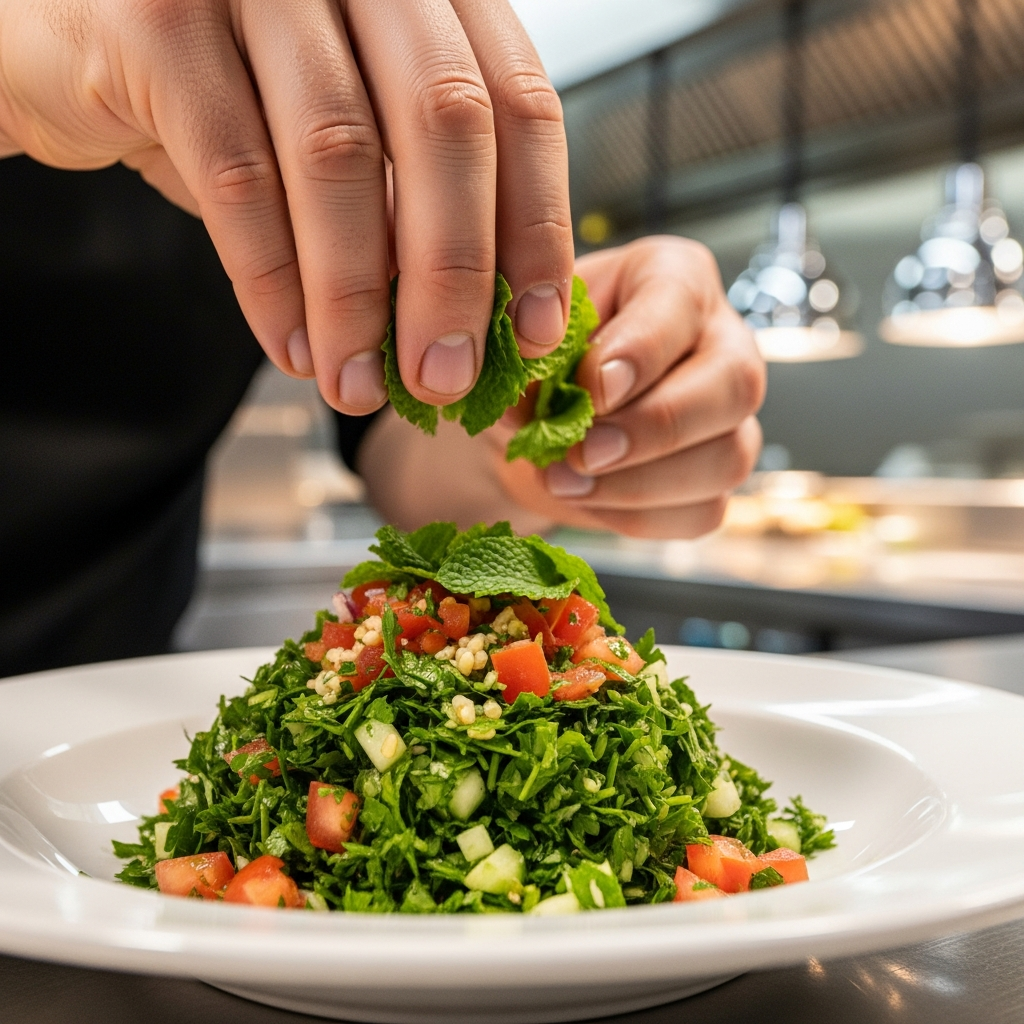
Traditional Taboili leans dramatically toward parsley, and that’s good news when you’re considering calories. The more you tip the ratio toward herbs, the more volume you get for minimal caloric cost. Finely chop flat-leaf parsley until it’s almost fluffy, and fold it with mint and tomatoes cut tiny enough to integrate. Think of bulgur not as a base, but as a textural accent. Half the amount you’d instinctively add and see how fresh and buoyant the result becomes. When teaching a community class in South Naperville, I watched people’s eyes widen when they realized how little grain they actually needed to feel content.
Cucumber is another place to add volume without pushing calories up. Remove the seeds if they’re watery and dice very small. The crunch helps you slow down at the table, which can be just as important as calories when you’re trying to eat with intention. Green onions, used sparingly, can intensify the salad’s aroma without changing the nutrition much either way.
Olive oil: measure with care
Olive oil is a gift to flavor and texture, but a heavy hand almost guarantees a calorie bump. For a family-sized bowl, start with less than you think—perhaps a delicate ribbon around the edge of the mixing bowl—and toss thoroughly before deciding whether you need more. Naperville’s dry winter air can make us crave richness, but lemon provides a similar sense of satisfaction by brightening the palate. Let the lemon do more of the lifting, and use oil to create a gentle sheen rather than a slick gloss.
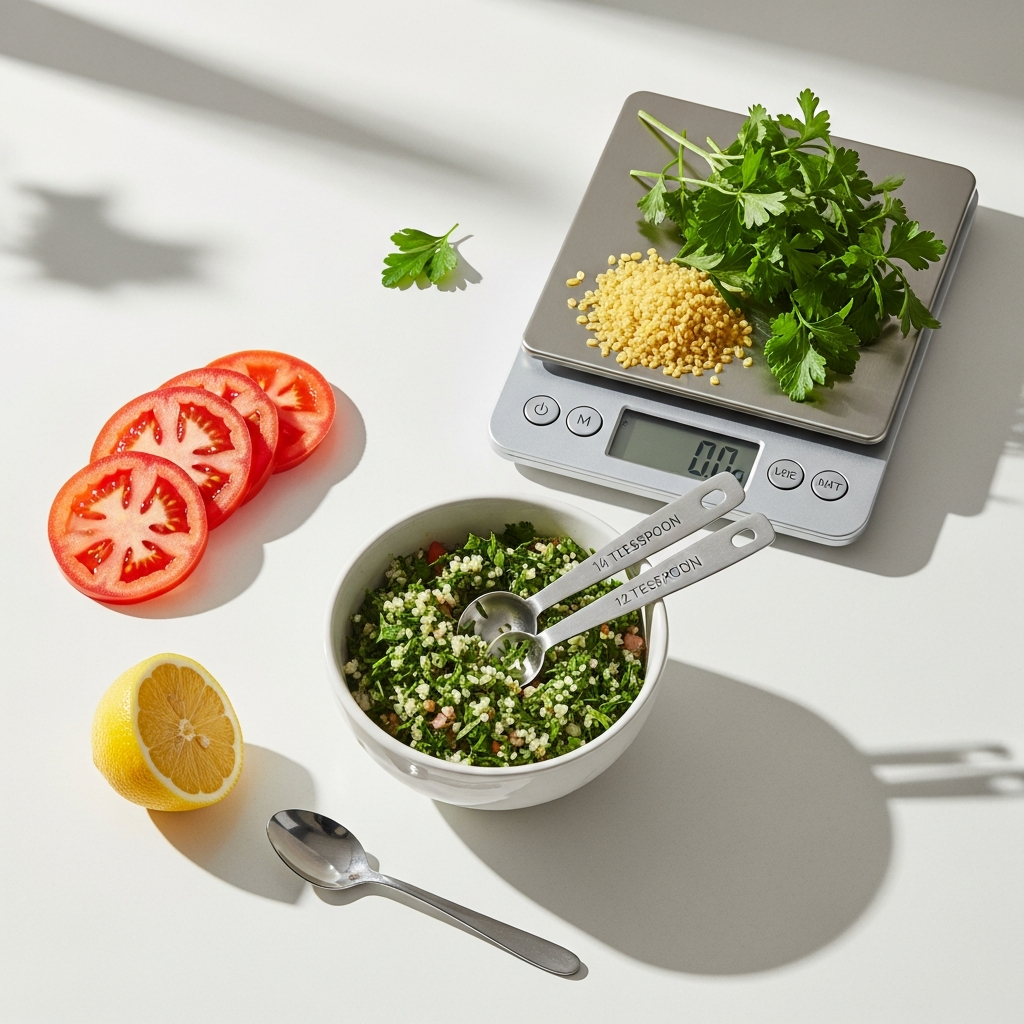
One practical trick is to whisk the lemon juice with a measured spoonful of oil in a small cup before dressing the salad. That way, you control the total amount rather than free-pouring. Toss in stages, tasting often. You’ll be surprised how full-flavored the salad is with a restrained approach to oil.
Calorie-aware swaps and variations
If you avoid gluten or simply want to experiment, try cooked, cooled quinoa in place of bulgur. Calorie-wise, it’s similar by volume but brings extra protein and a slightly different texture that many enjoy. Cauliflower rice, when pulsed very fine and used in small quantity, can also replace bulgur for an ultra-light, grain-free twist while keeping the spirit of the dish intact. Keep in mind that the heart of Taboili is parsley and lemon; any grain or grain substitute should play a supporting role.
Adding more tomatoes or cucumbers boosts volume with minimal calories, but there is a tipping point. Too much watery produce can dilute flavor, so keep your knife work fine and your seasoning purposeful. A small pinch of ground allspice or a dusting of sumac can deliver a big sensory reward without meaningfully affecting calories, making them smart tools for cooks watching intake.
Portions that satisfy
At home in Naperville, portion control often comes down to plate composition. If Taboili is your main dish for lunch, allow yourself a generous cup and pair it with crisp romaine leaves or a simple cup of lentil soup. For dinner, think of a half-cup serving beside grilled fish or chicken, roasted vegetables, or a small scoop of hummus and warm pita. The beauty of this salad is how thoroughly it wakes up the palate; even modest portions rarely feel stingy because the flavors are vivid and layered.
I often tell friends who are training on the Riverwalk or logging early miles on local trails that the greens and lemon in Taboili make a perfect recovery companion to a protein-rich main. It’s an easy way to eat more herbs and vegetables without feeling like you’re nibbling through a compromise.
Shopping light, the Naperville way
For the leanest flavors, start with the best produce you can find. At the Naperville Farmers Market, look for bouncy parsley with no yellowing leaves and mint that perfumes the air when you run a finger along the bunch. If you stop by a neighborhood grocer on Ogden Avenue, ask about fine bulgur—its delicate texture integrates most seamlessly and prevents the grain from taking over. Choose lemons that feel heavy for their size, a sign they’re juicy and ready to carry the dressing with less oil.
Olive oils vary widely, so buy one you like enough to taste on a slice of tomato. If it’s pleasant by itself, it will be perfect in a calorie-conscious Taboili, even in smaller amounts. That way, every drop works harder for flavor.
Cooking flow for mindful eating
Chop herbs last-minute to preserve their brightness, and toss the salad gently to keep the leaves intact. Let the mixture rest for 15 minutes, then taste again. Resting coaxes depth out of modest seasoning, which is helpful when you keep oil measured and salt moderate. The greens will soften slightly as lemon works its way through, and the whole bowl becomes more than the sum of its parts.
If you’re planning a week of mindful lunches, prep components on Sunday: wash and dry herbs, soak a small amount of bulgur, and store chopped tomatoes separately to keep moisture in check. Assemble in the morning and you’ll sit down to something that tastes awake and fresh, even after a busy commute up Washington Street or a flurry of meetings.
Pairings that support smart choices
Taboili loves simple protein and clean flavors. A small skewer of grilled chicken, a scoop of garlicky chickpeas, or roasted salmon make obvious partners. When looking for ideas that keep meals balanced, I often glance through a restaurant’s lighter offerings or a balanced Mediterranean menu to spark combinations: crisp salads beside warm, spiced meats; lemony grains alongside hearty bean dishes. Translating that logic into your kitchen is easy when you keep staples on hand.
For vegetarians and vegans around town, Taboili can anchor a plate with roasted cauliflower, charred peppers, and a spoonful of hummus. Add olives and pickled turnips for salty-tart counterpoints that wake up the herbs without racking up calories.
Making it family-friendly
Families often ask me how to help kids embrace an herb-centric salad. I like to start with a slightly finer chop and a tiny bit more bulgur to yield a texture that feels familiar. Serve it in small lettuce cups so it’s hand-held and fun. Put the bowl in the center of the table, and let everyone build plates. When kids see adults enjoying something with gusto, curiosity does the rest.
On chilly nights when Centennial Beach is only a memory and the furnace hums, pair a smaller serving of Taboili with a warm main so dinner still feels cozy. Comfort and lightness can share the table gracefully with a little planning.
The mindset that sustains smart eating
Smart eating isn’t a single choice; it’s a pattern that fits your life. Here in Naperville, with our markets, parks, and family schedules, Taboili slots right in. It’s make-ahead friendly, quick to assemble, and endlessly adaptable. It offers the rare combination of being both satisfying in the moment and supportive of your long-term goals. When you view it less as a rigid recipe and more as a tool—an herb-packed template—you’ll find it rescuing countless weeknights.
FAQ
How many calories are typically in a cup of Taboili?
It varies with oil and grain amounts, but a home-style cup commonly falls in the 150–220 range. Use more parsley, a measured drizzle of oil, and a lighter hand with bulgur to land toward the lower end.
What’s the easiest way to reduce calories without losing flavor?
Lean on lemon and fresh herbs. Bright acidity makes the salad feel lively, which allows you to cut back on oil. Very fine chopping also helps distribute flavor more evenly, so each bite tastes complete.
Is quinoa a good replacement for bulgur?
Yes. Cook it until just tender, cool it completely, and fold in a small amount. The calorie count remains similar per volume, but you gain a gluten-free option and a slightly different, pleasant texture.
Can I make Taboili ahead for work lunches?
Definitely. Prep components on Sunday, combine in the morning, and pack in a sturdy container. Keep a lemon wedge at your desk to refresh flavors right before eating.
How do I keep portions satisfying?
Build a plate around Taboili with lean protein and crunchy vegetables. For pairing ideas, imagine how items are balanced on a well-curated Mediterranean menu, then recreate that logic at home.
What if I added too much oil?
Add extra chopped parsley and a little more tomato to restore balance. A splash of lemon can also lift the flavor so it tastes bright again without more fat.
If you’re ready to put smart eating on autopilot with a salad that tastes like Naperville summer any time of year, start chopping parsley tonight. And when you want inspiration for simple mains to serve beside your bright, herb-packed bowl, take a minute to scan this inviting Mediterranean menu before you set the table.