
How to Store Pita Bread: The Ultimate Guide to Keeping It Fresh
Letting fresh, pillowy pocket bread go stale is a quiet disappointment that many home cooks and takeout lovers experience. When you bring home an exceptional meal, the soft, steaming flatbread is often the highlight of the feast. However, when left on the kitchen counter unprotected, that beautiful pocket can quickly turn dry, stiff, and brittle within a matter of hours. In the humid summers and dry, heated winters of northern Illinois, maintaining the perfect moisture balance in your bread requires a systematic approach. Understanding how to store pita bread correctly ensures you never have to deal with a cracked, unusable wrap or a moldy surprise in your pantry.
Whether you have leftovers from a late-night feast or you have stocked up on extra rounds for the week, proper storage preserves the elasticity and pocket structure of your flatbread. This guide walks you through the exact steps to keep your flatbread in peak condition, from the moment you bring it home to the second you reheat it. When you are ready to explore the local food scene, you can discover incredible dining spots by looking for the best halal restaurants near me to experience fresh, authentic bread served straight from the kitchen.
Before You Start: What You Will Need
To keep your flatbread from drying out or developing mold, gather these simple kitchen essentials before you begin the storage process:
- Airtight plastic storage bags: Heavy-duty freezer bags work best to seal out air and lock in moisture.
- Parchment paper or wax paper: Essential for separating individual rounds so they do not stick together during freezing.
- Aluminum foil: Ideal for wrapping bread tightly before heating or long-term freezing.
- Paper towels: Useful for absorbing excess moisture if you are storing freshly baked, warm bread.
- A clean, dry storage area: A dark pantry or bread box away from direct sunlight and heat-generating appliances.
Step 1: Cool the Bread Completely
Never put warm flatbread directly into a plastic storage bag. When hot bread is sealed inside plastic, it releases steam. This steam condenses on the interior of the bag, creating a damp environment. Excess moisture is the fast track to soggy bread and rapid mold growth, which can ruin your batch in less than forty-eight hours. Place the warm rounds on a wire cooling rack in your kitchen. Allow them to sit at room temperature until they are completely cool to the touch before moving to the next step.
Step 2: Wrap the Rounds Individually
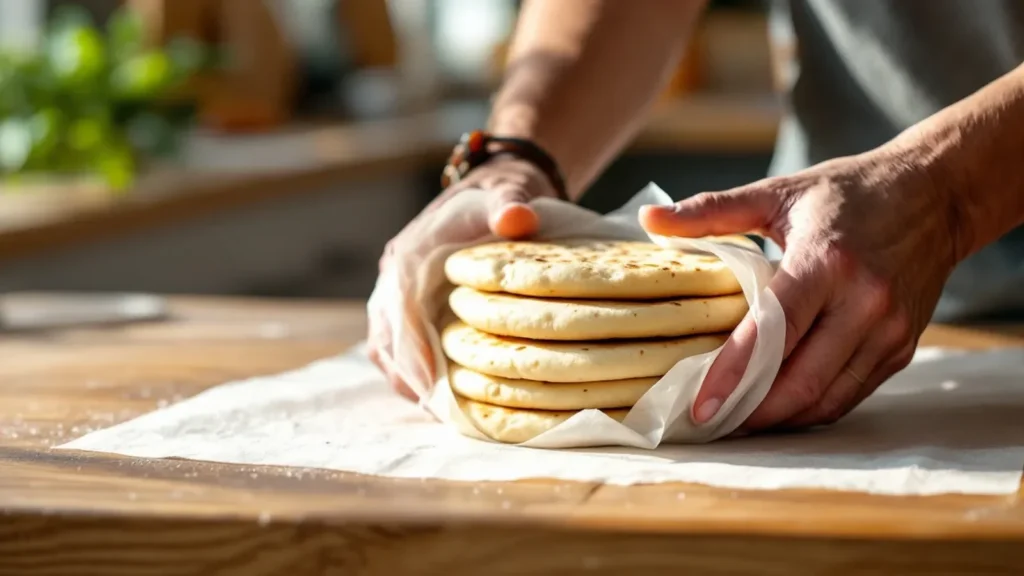
If you plan to store multiple pieces together, wrap each round individually in parchment paper or plastic wrap. This is particularly important for authentic, thin-walled pocket breads that tend to stick to one another when stacked. Separating them ensures that you can pull out a single piece of bread without tearing the delicate outer layers of the adjacent pieces, preserving the pocket structure for stuffing later. Wrapping also adds an extra barrier against air exposure, which is the primary cause of starch crystallization and staleness.
Step 3: Choose the Right Storage Location
For short-term storage of up to three days, keep your wrapped flatbread in a cool, dark pantry or a dedicated bread box. Keep the package away from the stove, toaster, or refrigerator top, as these areas generate heat and fluctuating temperatures that accelerate spoilage. Do not store your bread in the refrigerator. While refrigeration prevents mold growth, the cold temperature recrystallizes the starches in the flour much faster than room temperature, causing the bread to become dry, tough, and crumbly.
Step 4: Freeze for Long-Term Preservation
If you do not plan to eat the flatbread within three days, the freezer is your best option. Freezing halts the staling process completely without drying out the crumb. To freeze, place the individually wrapped rounds inside a heavy-duty freezer bag, squeeze out as much air as possible, and seal it tightly. Flatbread stored this way will maintain excellent quality for up to three months. To help you plan your weekly meals, check out our guide on managing halal dietary choices when dining out and ordering takeout.
Step 5: Thaw Safely at Room Temperature
When you are ready to eat a frozen round, do not rush the process by throwing it straight into a hot oven, which can make it cardboard-like. Instead, remove the desired number of pieces from the freezer and let them sit on the counter at room temperature for about ten to fifteen minutes. Keep them inside their individual wrappers while thawing so they reabsorb any ambient moisture trapped in the wrapping. This simple step ensures the bread regains its original soft, pliable texture before you apply any direct heat.
Step 6: Reheat on a Skillet for Maximum Pliability
The absolute best way to restore the fresh-baked texture of your flatbread is on the stove. Heat a dry skillet or cast-iron griddle over medium-high heat. Flick a few drops of water directly onto the flatbread surface, then place it on the hot skillet for about thirty seconds on each side. The heat will turn the surface water into steam, puffing up the bread and restoring its flexible, soft nature. This method is perfect if you are preparing to wrap savory meats like the ones you would find when learning how to spot authentic shawarma during your culinary adventures.
Step 7: Use the Oven or Microwave Alternative
If you are reheating multiple pieces at once, wrap a stack of flatbreads in aluminum foil, sprinkle a tiny amount of water between the layers, and place them in an oven preheated to 350 degrees Fahrenheit for five to seven minutes. If you are in a rush, you can use a microwave. Wrap a single piece of bread in a damp paper towel and microwave it on high for ten to fifteen seconds. Be careful not to overheat it in the microwave, as this can cause the gluten to toughen, leaving you with a hard, rubbery texture once it cools down.
The Naperville Kitchen Environment: Managing Local Humidity
In Naperville, Illinois, our local weather plays a major role in how baked goods behave on the counter. During our humid midwestern summers, excess moisture in the air speeds up mold growth significantly. A bag of fresh bread left in a warm kitchen during July can develop mold spots in a fraction of the time it would during other seasons. For local residents, this means the room-temperature storage window is much shorter, and moving your bread to the freezer by day two is highly recommended.
Conversely, our winters bring dry, indoor heating that saps moisture from everything. If your bread bag is not sealed perfectly air-tight during the winter months, your soft pockets will dry out and turn brittle overnight. Keeping a close eye on your indoor climate and ensuring your storage bags are fully zipped is key to preserving that perfect, tender bite year-round.
When to Call a Professional in Naperville
While mastering the art of home bread preservation is highly rewarding, nothing quite matches the flavor, aroma, and texture of flatbread served fresh from a professional kitchen. When you want to skip the prep work and enjoy perfectly puffed, warm pockets alongside freshly grilled meats and savory dips, it is time to dine out. Gathering with friends or family over a professionally prepared meal is an excellent way to experience Middle Eastern hospitality at its finest. If you are planning an upcoming gathering, birthday, or corporate lunch, you can also look into professional group halal catering for Naperville events to bring the freshest dining experience directly to your venue.
Frequently Asked Questions
Can I store pita bread in the refrigerator?
No, you should avoid storing pita bread in the refrigerator. The cold temperature of a fridge accelerates the crystallization of starches, causing the bread to dry out and go stale much faster than it would at room temperature.
How long does fresh pita bread last on the counter?
Fresh pita bread typically lasts for two to three days on the kitchen counter when kept in an airtight bag away from heat sources and direct sunlight. In hot, humid weather, it is best to freeze any portions you do not plan to eat within twenty-four hours.
Why does my pita bread crack when I try to open the pocket?
Cracking is a sign that the bread has dried out and lost its elasticity. To prevent this, store your bread in a tightly sealed airtight bag, and always reheat it gently with a splash of moisture (such as a damp paper towel or a splash of water in a skillet) to restore its flexibility before opening the pocket.
Can you freeze pita bread more than once?
It is not recommended to refreeze pita bread once it has been thawed. Repeated freezing and thawing breaks down the starch structures, leading to a mushy or excessively crumbly texture when reheated. Only thaw the exact amount of bread you plan to eat.
Enjoy Fresh flatbreads Every Time
By following these simple storage and reheating steps, you can keep your bread tasting fresh, soft, and ready for any meal. Protecting your baked goods from air, heat, and improper refrigeration preserves their texture so you can enjoy perfect wraps and dips at home. When you want to experience the absolute peak of fresh, authentic dining without the kitchen cleanup, treat yourself to a meal prepared by local experts. Explore the vibrant food options in our community by searching for top-quality halal food Naperville to enjoy delicious shawarma, flavorful dips, and warm, pillowy bread crafted to perfection.